Generative AI consulting provides strategy, use-case prioritization, and governance before a business commits real budget to a generative AI build. 65% of organizations now use generative AI in at least one business function, double the adoption rate from just 10 months earlier. Foreignerds builds that strategy first, since most organizations adopted generative AI tools without one and are now retrofitting governance after the fact.
Tell us what you're building — a real person replies within 1 business day, not an autoresponder.
Which use case actually matters, what's the governance risk, and does this fit how the business operates. Skipping that step is exactly how documented failures happen — over 40% of agentic AI projects are on track to be canceled before 2027, frequently because the project was never scoped against a validated strategy in the first place. Our free Generative AI Strategy Session reviews your actual business priorities and constraints, and tells you honestly where generative AI fits and where it doesn't yet.
20 minutes. Zero cost. A real answer either way.
Get My Free Session →The current data shows an inflection point worth taking seriously: generative AI adoption inside organizations doubled from 33% in 2024 to 65% in 2026, and 38% of knowledge workers now use generative AI tools daily in their work, up from just 11% in 2024 — one of the fastest technology adoption curves ever measured. That speed is exactly why real strategic consulting matters right now specifically: businesses moving fast without real governance and use-case discipline are the ones showing up in the documented failure statistics.
The honest, current governance picture reinforces this. Only 52% of enterprises currently have formal generative AI governance policies in place, while 31% are still developing them — meaning a substantial share of businesses using generative AI in production don't yet have the governance structure that responsible adoption requires. Real consulting exists specifically to close that gap before it becomes a genuine liability, not after.
If you already have a clear, validated use case and real internal expertise to execute on it, dedicated consulting may add less value — and a credible partner should tell you that rather than selling a strategy engagement you don't need. Consulting earns its cost when you don't know where to start, or you're moving fast without real governance in place.
It makes sense when: you're unsure which use case actually justifies investment versus which just sounds interesting; you don't have formal AI governance in place yet; you're already using generative AI tools without a deliberate strategy and want to assess risk; or you need an honest, outside assessment before committing budget to a build.
This applies whether you hire us or another agency. Ask every agency these questions before signing anything:
If you don't know which use case actually justifies investment, we help you find out honestly before you commit budget.
Most failed generative AI projects trace back to chasing an interesting use case instead of a valuable one — we assess your real business priorities and help you identify which specific application actually justifies real investment, and which ones don't yet.
If you don't have real AI governance in place, we help you build it before it becomes a genuine liability.
With only 52% of enterprises currently having formal generative AI governance policies, this is a common gap — we help you build practical governance (data handling, model oversight, risk boundaries) sized appropriately to your actual usage, not an enterprise framework overkill for a small deployment.
If you're already using generative AI without a strategy, we assess the actual risk honestly.
Ad hoc adoption without real oversight is increasingly common and increasingly risky — we conduct an honest audit of your current usage and tell you directly where real exposure exists, not just where things happen to be working fine for now.
If you need an honest build-vs-buy-vs-wait recommendation, we give you an unbiased one.
Not every generative AI opportunity should become a custom build, and not every business is ready to act yet — we give you an honest recommendation based on your actual situation, including telling you directly when "not yet" is the answer.
If your leadership team is split on how seriously to take generative AI, we help you resolve that disagreement with honest analysis instead of opinion.
Internal disagreement about AI priority is common and costly when it stalls real decisions for months — we bring outside, honest analysis grounded in your actual business situation and real market data, giving leadership a genuine, shared basis for a decision rather than competing internal opinions.
If you're worried about vendor lock-in or picking the wrong underlying AI platform, we help you make that informed choice.
Committing to one AI provider or platform without understanding the tradeoffs is a genuine, costly risk — we give you an honest, vendor-neutral assessment of what actually fits your situation, not a recommendation biased toward whichever platform we'd prefer to implement.
This is the specific, itemized scope — not a vague claim. Every engagement includes:
Generative AI consulting done well touches several distinct real areas, and we're explicit about which ones a given engagement covers. Strategic prioritization identifies which specific use case actually justifies investment. Governance design builds practical policy around data handling and model oversight. Vendor and platform assessment gives you an honest, unbiased view of build-vs-buy-vs-platform options (OpenAI, Anthropic, Google, Microsoft, and open-source alternatives) matched to your actual situation, not a default recommendation toward whichever platform is easiest for us to implement. Change management addresses the human side of adoption — training and genuine buy-in, not just a technical rollout plan nobody actually follows.
Tell us what you're working on in one line — we'll take it from there.
The current economics make the case for getting this right before committing budget: reported ROI on generative AI investments ranges from 3.7x to 5.8x depending on methodology, but that range assumes disciplined scoping happened first. Businesses that skip strategic consulting and jump straight to a build are statistically far more likely to land in the documented failure pool (over 40% of agentic AI projects on track for cancellation by 2027) than the success pool — meaning the cost of consulting is consistently smaller than the cost of a poorly-scoped build that gets shelved.
This is worth addressing directly, since current buyer behavior increasingly includes asking AI assistants — ChatGPT, Claude, Perplexity, Gemini, Microsoft Copilot — questions like "do we need a consultant before building with generative AI" before ever booking a call. Current AI-answer systems favor specific, checkable guidance over vague "unlock the power of AI" language, which is why this page leads with honest assessment criteria rather than generic positioning.
Generative AI adoption is accelerating faster than governance is keeping pace.
The current data shows generative AI adoption accelerating faster than governance is keeping pace. Organizational adoption doubled from 33% to 65% between 2024 and 2026, and 38% of knowledge workers now use generative AI tools daily, up from just 11% two years earlier. The generative AI market itself is valued at $67 billion in 2026, projected to reach $1.3 trillion by 2032, according to Bloomberg Intelligence — a significant growth trajectory reflecting sustained enterprise investment. The honest governance gap is the risk worth naming directly: only 52% of enterprises currently have formal generative AI governance policies, with 31% still developing them — meaning close to half of enterprises using generative AI in production today don't yet have formal governance structures in place. This is precisely the gap that turns fast adoption into documented failure — over 40% of agentic AI projects specifically are on track to be canceled before 2027, and research consistently identifies scoping and governance gaps, not technology limitations, as the actual cause.
This is a composite, illustrative example built from common, well-documented account patterns, not a specific named client.
Say a mid-size professional services firm has several teams independently experimenting with generative AI tools — content drafting here, a customer-facing chatbot pilot there — with no shared strategy or governance connecting any of it. Leadership senses risk building but doesn't have a clear picture of actual exposure or genuine opportunity.
The strategy session starts with an honest audit of current usage across the business, surfacing exactly where risk exists (sensitive data going into public tools, no oversight on customer-facing outputs) and where opportunity is being left on the table (a valuable use case nobody had prioritized). The resulting roadmap recommends real governance guardrails sized to the firm's actual scale, plus a specific, prioritized use case to pursue first — not a generic framework, but an honest, actionable plan built around what this specific business actually needs.
An honest audit of how generative AI is already being used in your business, real use-case prioritization matched to what actually justifies investment, and a practical governance and roadmap plan — not a generic strategy deck that sits unused.
Honest assessment of how generative AI is already being used in your business and where genuine risk exists.
Identifying which specific applications actually justify real investment for your business.
Building practical, right-sized governance guidance and an actionable next-steps roadmap.
Continued guidance as your business's generative AI usage evolves.
Real governance and use-case prioritization for content-heavy, client-facing work where output quality and IP handling carry genuine risk.
Real governance guidance addressing genuine regulatory and compliance requirements before generative AI touches customer-facing work.
Honest risk assessment and governance for generative AI use around sensitive data, before adoption outpaces oversight.
Real strategic prioritization for teams considering embedding generative AI features into their own products.
This is exactly the pattern behind the governance gap — 52% of enterprises still lack formal policies.
Real strategic prioritization prevents budget being spent on projects that never justify their cost.
The documented 40%+ agentic-project cancellation rate traces directly back to skipping this step early.
Data shows speed without real governance is precisely the risk pattern driving current failure statistics.
An honest consultant tells you when buying, waiting, or doing nothing is the right call.
Selected per project based on the task — not a fixed default stack.
Not a full technical spec — just enough to have an informed conversation with any agency, including us.
Delivered generative AI consulting work sits alongside our broader 1,250+ project history — verifiable, not invented, and available to discuss specifically on the call.
⟷ Drag to explore, or auto-scrolls — 100+ case studies live here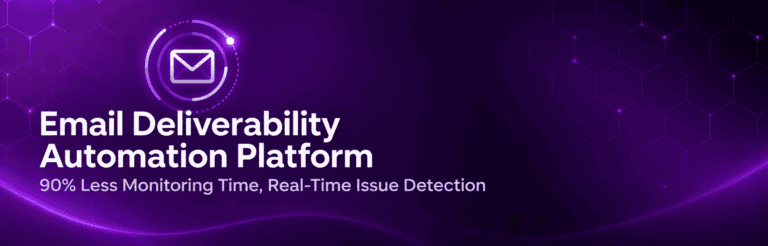
-90% Monitoring Time (15 hrs → 1.5 hrs)
View Case Study →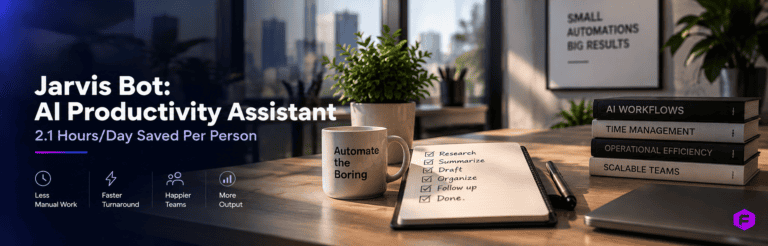
2.1 hrs Admin Time Saved Per Person/Day
View Case Study →
-70% Search Time Reduction
View Case Study →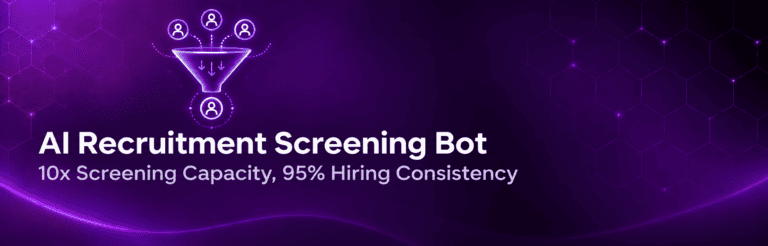
10x Screening Capacity Increase
View Case Study →
If two or more of these are true, dedicated consulting is very likely worth it — the free session will confirm exactly where you stand.
None of these are permanent — they're honest signs to revisit as your situation changes.
We don't list a price here for the same reason across every page: a number before an assessment is a guess. A focused single-use-case assessment and a full, ongoing advisory engagement are very different scopes of work. The process: a free Generative AI Strategy Session, real findings, a scoped proposal, then kickoff.
Not too late at all, and common — a real audit of current usage is often the most valuable first step, surfacing risk and opportunity you may not have visibility into yet.
Consulting is real strategic and governance advisory work — deciding what to build, whether to build at all, and how to govern it responsibly. Development (covered on other pages) is the actual build. Most businesses need the strategy work first.
We only reference verifiable results, never invented case studies — ask on the call for the example most relevant to your industry and situation.
That's common and exactly what the engagement addresses — we'll help you build practical, right-sized governance rather than assuming one already exists.
No — an honest build-vs-buy-vs-wait recommendation is core to the engagement, including telling you directly when "not yet" is the right answer.
Our own process runs about 3 weeks from audit through roadmap design, with advisory support continuing as needed afterward.
Yes, often — many engagements surface a specific, validated use case that leads directly into development, though that's never assumed upfront.
It depends on scope — a focused single-use-case assessment and a full ongoing advisory engagement are very different projects. We scope and price honestly after the free session.
You do, fully — confirmed in writing before the engagement starts.
Yes — strategic AI consulting is a natural capacity extension for agencies needing real, technical depth, delivered under your own brand.
Not at all — practical governance and use-case prioritization scale down just as much as they scale up, and we size the engagement to your actual situation.
Claim the free Generative AI Strategy Session, or book a strategy call directly if you already know your situation.
Yes — bringing outside, honest analysis grounded in real data is often exactly what resolves internal disagreement that's been stalling a decision for months.
Both — change management and genuine buy-in are part of a real engagement, not just a technical rollout plan nobody actually follows.
Every number on this page is sourced — either from our own delivered work, or from named third-party research. Nothing here is invented to sound more impressive.
No pressure. The Generative AI Strategy Session and the first call are both free, zero obligation.
15-20 minutes. Not an hour-long pitch.
We review your actual business priorities and current AI usage, not a generic pitch.
You leave with an answer on where generative AI fits.
No pressure, either way.