SEO is the practice of improving a website's visibility in organic search results through content, technical structure, and authority signals. SEO has weathered major algorithm shifts since 1998, including Panda, Penguin, Hummingbird, and BERT, with businesses surviving each by adapting to why rules changed. Foreignerds builds SEO strategy around that same durability, not short-term tricks.
Tell us where you stand today — a real person replies within 1 business day, not an autoresponder.
Neither approach builds something that lasts. Our free AI Visibility Audit shows exactly where you stand today, in both classic search and AI-driven answers, before we recommend anything.
20 minutes. Zero cost. A real answer either way.
Get My Free Audit →SEO as a named discipline is genuinely old by internet standards — Google itself launched in 1998, and the practice of optimizing for it has been a real profession for essentially the entire time since. That history matters practically, because Google has fundamentally rewritten how ranking works multiple times, and the businesses that survived every rewrite were never the ones chasing the specific trick that worked last quarter — they were the ones building genuinely useful content and trustworthy sites, which is the one strategy every major update has rewarded and every major update has eventually punished the absence of. The 2011 Panda update was the first to specifically target thin, low-value content and 'content farms.' A year later, the 2012 Penguin update did the same thing for manipulative backlinks, penalizing sites that had bought or spammed their way to artificial authority. Both updates caused real, publicly documented ranking collapses for businesses that had built entire strategies around exactly the tactics being penalized. 2013's Hummingbird update was different in kind, not degree — it replaced Google's core algorithm to better understand the actual intent behind a search, not just the literal words typed, the first real step toward the conversational, question-answering search behavior that's now standard. Panda was eventually folded permanently into Google's core algorithm on July 16, 2016, meaning what started as a distinct, separate penalty system became simply part of how every page gets evaluated, permanently. That pattern — a targeted update eventually becoming baseline expectation — has repeated with almost every major shift since, including the industry's current pivot toward AI-driven answers.
If your business gets no meaningful traffic from search — pure referral or repeat-customer models, for instance — SEO may not be the most urgent investment today. It matters most for businesses whose customers actively search for what they offer, compare options online, or research before buying.
SEO becomes a real priority when: your buyers actively search for your product or service category, competitors consistently outrank you for terms that matter, your traffic has been flat or declining without an obvious cause, or you've never had a real technical and content audit done.
This applies whether you hire us or another agency. Ask every agency these questions before signing anything:
A full crawl of your site checking indexing errors, site speed (Core Web Vitals specifically), broken links, duplicate content, mobile usability, and structured data implementation — the invisible foundation that determines whether Google can even properly evaluate your content.
Real search volume and intent analysis, mapped against what your actual competitors rank for and where the genuine gaps are — a prioritized roadmap based on real opportunity and real ranking difficulty for your specific site.
Full content planning built around real search intent and topical authority — writing or restructuring existing pages, optimizing title tags, meta descriptions, header structure, and internal linking.
Earned, legitimate backlinks built through real relationships, genuine digital PR outreach, and content worth citing on its own merits — never purchased links or manufactured link schemes.
Full optimization of your Google Business Profile, local citation consistency across directories, and location-specific content — the distinct signal set built on the Pigeon-era shift toward location-weighted results.
Monitoring how your brand appears — or doesn't — inside ChatGPT, Claude, Gemini, and Google's AI Overviews alongside classic rankings, since the 12% overlap statistic means these require genuinely separate tracking.
The rewrites kept coming through the 2010s, and each one targeted a different assumption businesses had been relying on. The 2014 Pigeon update tied local and core search algorithms together, weighting a user's actual location far more heavily than before — a real shift for any business competing on "near me" style searches, which had previously operated almost as a separate system from broader organic rankings.
That same year, Google added HTTPS as an official ranking signal, meaning a business's basic website security suddenly became a factor in whether it ranked at all — a decision that pushed the entire web toward encryption faster than security-conscious arguments alone ever had. Five years later, the 2019 BERT update improved Google's understanding of natural, conversational language rather than isolated keywords, the update most SEOs found hardest to react to specifically because the actual fix was unglamorous: write clearly and accurately, for real people, rather than for a specific algorithmic pattern.
Look at that sequence end to end — thin content, manipulative links, search intent, local relevance, basic security, natural language — and a pattern emerges that the current AI-search shift is really just the latest chapter of: every major update has pushed toward genuinely serving the person searching, and away from gaming a specific technical signal. Agencies that understand that pattern build strategies that survive the next update. Agencies chasing the last update's specific loophole are building on borrowed time, and the industry's own 25-year track record proves it repeatedly.
Real, current research — not projections.
SEO's core mechanics have shifted again in the past 18 months, and the shift is genuinely comparable in scale to Hummingbird. Google AI Overviews now appear on roughly 25% of all searches, and independent research has found only about 12% overlap between what ranks in Google's traditional top 10 and what gets cited in AI-generated answers — meaning ranking well no longer guarantees visibility the way it did for most of SEO's 25-year history. This isn't a replacement for SEO; it's an addition to what counts as visibility now.
At the same time, classic organic search remains enormous in absolute terms — BrightEdge's research still places organic search at roughly 53.3% of total web traffic, far larger than AI referral traffic's current 1% share. The honest read: SEO isn't being replaced, it's being asked to cover more ground than it used to, tracking both classic rankings and the newer AI-citation layer sitting on top of them.
Tell us what you're working with in one line — we'll take it from there.
This is a composite, illustrative example, not a specific client.
Say a mid-sized service business built its SEO strategy years ago around keyword-stuffed pages and purchased backlinks — tactics that arguably worked in the early 2010s, before Panda and Penguin specifically targeted them. Traffic has been declining for two years with no obvious explanation. The audit reveals the real cause: thin content Panda-style filtering has been quietly suppressing the site for years, and the purchased backlink profile is actively working against it post-Penguin, not helping. The fix isn't a quick technical patch — it's rebuilding the content around genuine topical depth and earning real authority signals over time, undoing years of tactics that were never sustainable even when they briefly worked.
The same standard applied whether the project is a local business or an e-commerce site with thousands of pages.
A real audit of technical health, content quality, and current backlink profile — flagging anything left over from outdated or risky past tactics.
Fixing technical issues and building genuinely useful, topically authoritative content, not keyword-stuffed pages.
Ongoing — Authority Building & Monitoring. Earning real authority signals over time, since legitimate SEO results compound rather than appear overnight — and tracking both classic rankings and AI citation together.
Product and category page optimization at scale, where technical SEO issues compound across thousands of pages if left unaddressed.
Local and topical authority for high-value, research-driven purchase decisions where trust signals genuinely matter to both users and rankings.
Local SEO specifically, where geographic proximity and review signals often matter more than broad domain authority.
Topical authority content addressing the genuine research phase B2B buyers go through before ever contacting sales.
Keyword stuffing and purchased links were specifically targeted by Panda and Penguin over a decade ago — agencies still recommending them are either uninformed or knowingly selling harm.
Google updates its algorithm constantly — a strategy built once and never revisited degrades as the underlying rules keep evolving.
Even excellent content can't rank if a site has fundamental crawlability or speed problems underneath it.
With only 12% overlap between rankings and AI citations, a Google-only strategy is now missing a real and growing share of how people find businesses.
Legitimate SEO built on genuine authority compounds over months, not days — agencies promising fast rankings are usually describing risky tactics.
None of these mistakes are exotic — they're ordinary, avoidable gaps most rushed SEO efforts share.
Find Out Where the Real Gaps Are — Get the Free Audit →Four honest signals — if two or more sound like you, a dedicated SEO program is worth starting.
The real categories involved — not a build recipe, just enough to ask any agency the right questions.
Selected per project based on the task — not a fixed default stack.
None of these are permanent — they're signs to revisit SEO once the real opportunity is confirmed with a free audit.
Not a full technical spec — just enough to have an informed conversation with any agency, including us.
Still unsure what applies to your business?
That's Exactly What the Free Audit Is For →Every number on this page is sourced — either from our own delivered work, or from named third-party research. Nothing here is invented to sound more impressive.
No pressure. The assessment and the first call are both free, with zero obligation.
15-20 minutes. Not an hour-long pitch. Here's exactly what we cover:
Not an hour-long pitch.
Your actual current search and AI visibility, not a generic pitch.
On where the actual opportunity sits.
We don't list a price here for the same reason across every page: a number before a real audit is a guess. A local business needing local SEO and an e-commerce site needing technical work across thousands of pages are different scopes of work.
The same standard used across every engagement.
Answer a few quick questions and we'll walk into the call already understanding what you need — not starting from scratch.
From AI voice outreach platforms to custom software and full-funnel marketing programs — every case study comes with numbers you can verify.
⟷ Drag to explore, or auto-scrolls — 100+ case studies live here
-90% Monitoring Time (15 hrs → 1.5 hrs)
View Case Study →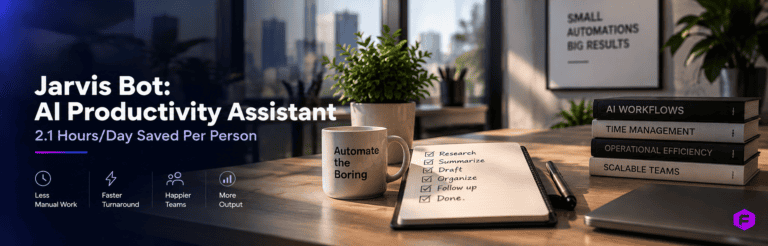
2.1 hrs Admin Time Saved Per Person/Day
View Case Study →
-70% Search Time Reduction
View Case Study →
10x Screening Capacity Increase
View Case Study →

SEO optimizes for ranking in traditional search results — the foundation, dating back to Google's earliest years. GEO and AEO specifically optimize for citation in AI-generated answers, a genuinely newer discipline layered on top of that foundation. Most businesses need both today, since the 12% overlap statistic shows that ranking well no longer guarantees AI visibility, and the two now function as complementary rather than interchangeable disciplines.
Because Google specifically built algorithm updates to target them, one by one, over more than a decade. Keyword stuffing and thin content were directly targeted by 2011's Panda update; purchased and spammy backlinks were directly targeted by 2012's Penguin update. Both are now well over a decade old — tactics that once briefly worked have been actively and increasingly penalized ever since, not quietly deprecated.
Legitimate SEO built on genuine authority and content quality typically shows meaningful movement within 3-6 months, and continues compounding well after that — noticeably slower than manipulative tactics once promised, but durable and resistant to the next algorithm update in a way those tactics never were.
We publish only verifiable results, never invented statistics — ask on the call for the example most relevant to your industry, and we'll walk through exactly what's real and how you could verify it independently.
A core update is a broad, systemic change to how Google evaluates content and sites overall, not a narrow, targeted penalty aimed at one specific tactic. A real traffic drop is always worth investigating properly, but the right response is understanding what underlying quality signal likely shifted, not panicking into a fast, risky fix that might make things worse.
Earning genuine, legitimate links — through real relationships, real content worth citing, real digital PR — remains safe and valuable. Buying or manufacturing links artificially is exactly what Penguin was built to catch, over a decade ago, and remains risky today.
We track both together, since they're increasingly connected — good technical and content foundations support both classic rankings and AI citation, and treating them as fully separate disciplines misses how much they actually overlap in practice.
Optimizing only for classic Google rankings while ignoring AI-driven search entirely, when research shows only 12% overlap between the two — a Google-only strategy today is missing a real and growing share of actual buyer discovery.
It depends on scope — technical complexity, content volume needed, and competitive difficulty all factor in. We scope and price honestly after the free audit, once we understand your specific starting point.
Local SEO specifically is often more accessible and faster-moving for small businesses than broad national SEO — the audit will show honestly whether your specific situation has real opportunity.
We review your current search and AI visibility together, showing exactly where you stand across both, at no cost and with zero obligation to move forward afterward.
No credible SEO vendor can honestly guarantee a specific ranking, since Google's own systems make that determination, not any agency — we can tell you plainly what's realistic based on your competitive landscape.
A very common, fixable situation. We audit what's currently in place, identify what's actively working against you versus what's simply outdated, and rebuild the strategy around what genuinely works today.
Claim the free AI Visibility Audit, or book a strategy call directly if you already know what you need.