An AI visibility audit shows exactly how a brand appears — or fails to appear — across ChatGPT, Claude, Google AI Overviews, Perplexity, and Microsoft Copilot. Most businesses have never had this measured at all, despite AI increasingly shaping how customers discover and evaluate them. Foreignerds runs this audit free, with a prioritized action plan, not a sales pitch disguised as a report.
Tell us a bit about your business — a real person replies within 1 business day, not an autoresponder.
Here's what's changed. When someone asks ChatGPT "who's the best AI development agency for a mid-market company," or asks Claude to compare software development firms, or gets a Google AI Overview summarizing "top custom software developers," none of those answers are built the way a traditional Google search result is built. They're generated — assembled from whatever sources the AI system trusts enough to cite, mention, or quote. If your business isn't structured to be found, understood, and trusted by those systems, you don't just rank lower. You don't exist in the answer at all — even if you're the best option, even if you rank #1 in classic Google search for the same query. This is not a future problem, and it's not just a ChatGPT problem. As of mid-2026, ChatGPT still handles the majority of AI-chatbot traffic overall, but the market has fragmented fast: Claude's share of measurable B2B AI referral traffic — the exact category most relevant to a business like yours — has grown from roughly 1.4% to over 18% in under a year, making it the clear #2 source of B2B AI-driven traffic behind ChatGPT. Gemini and Perplexity are close behind. An audit that only checks ChatGPT is checking one part of a five-platform problem.
It helps to understand the mechanics before trying to fix anything. When someone asks ChatGPT, Claude, or Perplexity a question, the AI isn't running a live web search and reading everything it finds with equal weight. It's pulling from a combination of what it already knows, what a live retrieval step surfaces as the most relevant and trustworthy sources for that specific question, and — critically — how easily it can extract a clean, confident, well-supported answer from those sources.
Three things influence that more than anything else:
Structure — content organized in clear, directly-answerable blocks gets pulled into a generated answer far more often than the same information buried in a long, unstructured paragraph.
Corroboration — if three independent, credible sources describe your business the same way, an AI system treats that as far more trustworthy than your own website saying it about yourself. This is why third-party presence (reviews, directories, press, community discussion) matters as much as your site's own content.
Machine-readable confirmation — structured data (schema markup) gives an AI system a direct, unambiguous answer to "what does this business do, where are they located, what do people say about them" instead of forcing it to infer that from prose, which it will sometimes get wrong.
This is also why traditional SEO tactics only partially transfer. A page can be well-optimized for Google's classic ranking algorithm and still fail all three criteria above — which is exactly the gap an AI visibility audit is built to find.
Real, current research — not projections.
The gap between ranking well and being recommended by AI is not a small one, and it's measured, not theoretical. Omni Eclipse manually checked 1,700 verified businesses across 32 industries and found that 77% of businesses ranking on Google's first page are completely invisible in ChatGPT recommendations for the same buying queries. A separate, larger dataset from Boring Marketing — thousands of live audits across ChatGPT, Perplexity, Claude, and Gemini — found 53% of brands are invisible in AI answers overall, with legal and professional services the worst-affected category at 86% zero-visibility. Neither of these is a ChatGPT-specific quirk — it's the same structural gap this audit exists to measure.
Being mentioned and being cited are also not the same thing, which is exactly why this audit measures both separately. OtterlyAI's analysis of over one million citations found Google AI Overviews show the strongest brand preference at 59.8% of citations going to a brand's own site, compared to 44.7% for ChatGPT — meaning platform choice genuinely changes whether a citation sends a visitor to you or just talks about you. Semrush's AI Visibility Index, analyzing 126 million US AI search prompts, found the overlap between brands mentioned and domains actually cited can fall below 30% on Gemini — a business can be recommended by name while the evidence behind that recommendation sits entirely on someone else's page.
A traditional SEO audit answers one question: how well does your website rank in classic search engine results pages? It looks at backlinks, page speed, keyword rankings, and crawlability.
An AI visibility audit — sometimes called a GEO audit (Generative Engine Optimization) or an AEO audit (Answer Engine Optimization) — answers a different and increasingly more important question: do AI answer engines find, trust, cite, and recommend your business?
These overlap — strong content and credible authority signals help both — but they are not the same measurement. A business can hold a page-one Google ranking and still be completely absent from what ChatGPT or Claude tells a prospective customer. Foreignerds' AI Visibility Audit is built specifically to measure the second problem, which almost no agency is currently equipped to diagnose.
Most "AI visibility" offers on the market today are a single, shallow check: "did ChatGPT mention you, yes or no." That's not a real audit — it's a headline stat. Ours measures seven distinct dimensions, because that's what it actually takes to know where you stand and what to fix.
In plain terms: How often an AI system directly names your website as the source of its answer. The percentage of relevant buyer prompts where an AI system explicitly cites your URL or domain. This is the strongest signal of source authority.
In plain terms: How often your business name comes up, even without a link. The percentage of prompts where your brand is mentioned even without a direct citation — still valuable, often the first sign your authority signals are starting to register.
In plain terms: How you stack up against named competitors, not just whether you show up at all. Your mentions divided by total mentions across your competitive set, for the same prompts.
In plain terms: When AI systems talk about you, are they getting it right? This checks for inaccurate claims, outdated information, or an AI system inventing a fact about your business (a hallucination) — all of which can actively hurt you even while making you "visible."
In plain terms: Can an AI system actually pull a clean fact out of your page, or is it buried? Whether your pages use clear headings, direct-answer blocks, defined terms, and organized data — versus long unstructured paragraphs that are technically "on your site" but functionally invisible to an AI crawler.
In plain terms: Does your website hand AI systems a clean answer sheet, or make them guess? Whether your site uses schema.org markup (Organization, Service, FAQPage, Review) that gives AI systems machine-readable confirmation of who you are, rather than making them infer it from prose.
In plain terms: What's the rest of the internet saying about you, and does it match your own story? AI systems weight third-party sources — reviews, directories, press, community discussion — heavily, often more than your own website copy. This is the primary reason GEO is considered roughly 80% strategic and reputation-driven, and only 20% purely technical.
Tell us what you're working with in one line — we'll take it from there.
We don't charge for the AI Visibility Audit itself. The audit exists to show you, concretely, where you actually stand — which platforms mention you, which ones don't, and what a fix would realistically involve. That's information you should have regardless of whether you ever work with us.
If the findings show real gaps worth fixing, we'll walk you through what implementation looks like and what it costs — but that conversation happens after you've seen your actual results, not before, and there's no obligation attached to requesting the audit.
A real baseline of how your brand shows up across AI platforms today, a page-by-page audit against what actually earns citations, and a technical review that closes the gaps — not a one-time scan that goes stale in a month.
We identify 20-30 real buyer prompts across your major categories, comparisons, and common customer questions, and establish your current AI visibility baseline through direct testing across ChatGPT, Claude, Gemini, Perplexity, and Copilot.
We audit your 5-10 highest-priority revenue pages against all 7 visibility dimensions: does each page directly answer its core question, is it backed by primary evidence, does it use clear headings and extractable structure, and does it clearly communicate what you actually offer.
We audit your schema markup coverage, your entity consistency across the web (is your business described the same way everywhere, or inconsistently), and your third-party footprint across review platforms, directories, and industry sources.
Week 4 — Report, Roadmap & Kickoff. You receive the full audit report and a prioritized 90-day roadmap, walked through live, with the highest-revenue-impact fixes identified first — followed by implementation if you choose to move forward with us.
When someone asks an AI assistant to "find a licensed plumber near me" or "compare HVAC companies in [city]," that answer increasingly comes from AI Overviews and conversational AI assistants — not a scrolled list of ten blue links. Local service businesses that aren't structured for AI visibility are losing calls to competitors they may not even know are outranking them, because there's no ranking page to check, just an answer that either includes you or doesn't.
For this category specifically, the audit places extra weight on: Google Business Profile consistency (is your listed phone number, hours, and service area accurate and identical everywhere), local directory presence (Angi, HomeAdvisor, Yelp, and industry-specific directories), review volume and recency (AI systems weight recent reviews more heavily than old ones), and location-specific prompt testing such as "best emergency plumber in [city]" or "who do I call for a burst pipe near me" rather than only broad, non-local industry terms. A home services business with 40 reviews from 2021 and none since will often lose an AI recommendation to a newer competitor with 15 recent reviews — recency outweighs raw volume in a way most owners don't expect.
Buyers researching a CPA, an employment attorney, or a consulting firm increasingly start that research inside ChatGPT or Claude, asking for a shortlist or a comparison before ever visiting a website. If your firm isn't part of that generated shortlist, you're not losing a ranking position — you're not in the conversation at all.
For this category, the audit weighs credential and expertise signals heavily: bar admissions and certifications listed clearly and consistently, published thought leadership (articles, guides, case commentary), disclosable case results, and how consistently your firm's specialization is described across your site, LinkedIn, and directory listings. Professional-services buyers are unusually sensitive to trust and authority signals before ever picking up the phone, and AI systems are tuned to weight exactly those same signals when deciding who to recommend for a high-stakes, low-frequency purchase like hiring a lawyer or an accountant.
If you run a smaller marketing or web agency and your clients are starting to ask "what about ChatGPT / AI search," you need a defensible answer and a real audit methodology behind it, not a one-page checklist. Foreignerds' AI Visibility Audit is available white-label, so you can offer this to your own client base under your own brand.
White-label partners receive the same 7-dimension methodology, reports rebranded under your agency, and the choice between two delivery models: we handle audit execution and client-facing calls under NDA while you own the relationship, or we hand you the completed report and data to present yourself. Either way, you're offering a defensible, real methodology instead of a generic checklist your clients could find on any blog.
The single most common mistake. Teams take their existing SEO checklist, swap a few keywords, and call it done. AI visibility depends much more heavily on third-party corroboration and content structure than on-page keyword tactics.
Most small and mid-sized business websites we audit have either no schema markup or only a partial, outdated implementation left over from a previous developer.
Different phone numbers, service descriptions, or addresses across your website, Google Business Profile, and directory listings actively undermine the trust signal AI systems use to decide whether to cite you.
Long, story-driven, brand-voice-heavy copy can be excellent for a human visitor and simultaneously nearly invisible to an AI system trying to pull a specific, quotable fact out of it.
AI visibility is not a one-time fix. Answer engines refresh their sources, competitors publish new content, and your share of voice moves over time.
Not sure if you're already making one of these?
That's Exactly What the Free Assessment Uncovers →If more than two or three of these are true for your business, it's a strong signal you're already losing ground you can't currently see.
We're not a traditional SEO agency that bolted "AI" onto our service list. AI development and AI-powered systems are our core practice — we build the AI voice agents, chatbots, and automation systems that companies use every day, which means we understand how these systems actually retrieve, weight, and generate answers, not just how to write content that hopes for the best.
That difference matters more than it sounds. An agency primarily selling traditional SEO that's now offering "GEO" as a rebrand is applying search-ranking logic to a fundamentally different kind of system — one built on retrieval, corroboration, and language generation, not link graphs and keyword density. Our team works with the underlying technology (large language models, retrieval systems, structured data pipelines) as day-to-day practice, not as a topic researched to build a new service line.
We combine that technical grounding with full-spectrum digital marketing delivery — SEO, content, and paid media — so the roadmap this audit produces isn't a technical report handed to you with no path to execution. If you want us to implement it, we can, end to end.
Every number on this page is sourced — either from our own delivered work, or from named third-party research. Nothing here is invented to sound more impressive.
No pressure. The assessment and the first call are both free, with zero obligation.
Answer a few quick questions and we'll walk into the audit already understanding what to test — not starting from scratch.
From AI voice outreach platforms to custom software and full-funnel marketing programs — every case study comes with numbers you can verify.
⟷ Drag to explore, or auto-scrolls — 100+ case studies live here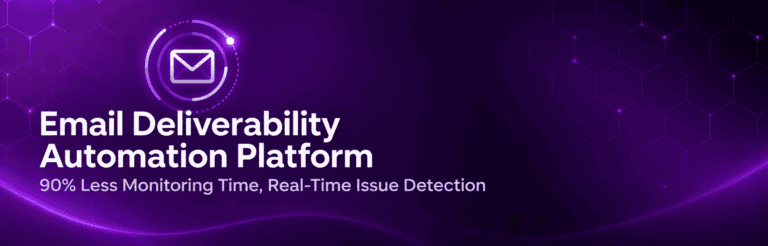
-90% Monitoring Time (15 hrs → 1.5 hrs)
View Case Study →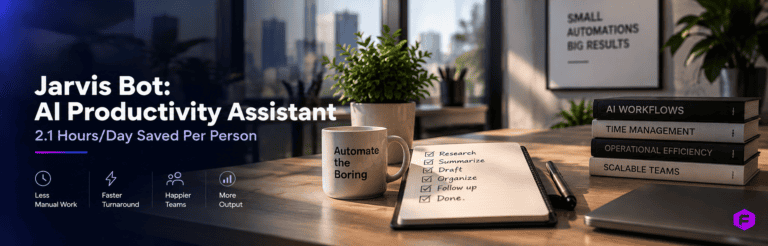
2.1 hrs Admin Time Saved Per Person/Day
View Case Study →
-70% Search Time Reduction
View Case Study →
10x Screening Capacity Increase
View Case Study →
They're close enough that most practitioners use the terms interchangeably. AEO generally refers to getting cited or featured in direct-answer results. GEO is the broader term, covering visibility, accurate representation, and recommendation across generative AI systems as a whole.
No. You don't need to update your entire site to start improving AI visibility. The right approach is to start with a small set of pages tied closely to revenue, get those working, then expand.
A traditional SEO audit tells you if a search engine can find and rank your site. An AI visibility audit tells you if an AI system will actually cite, quote, or recommend you when a real buyer asks it a question.
There's no fixed industry-wide timeline — how quickly visibility shifts depends on how often the specific AI platforms refresh their answers, your existing content quality, and your competitive landscape. What we can commit to is a clear 4-week audit-to-roadmap process.
Yes, and yes. AI systems sometimes generate inaccurate claims about a business. Our audit includes a dedicated hallucination and narrative-accuracy check specifically to catch this.
Yes. If you run a marketing or web agency and want to offer AI visibility auditing to your own clients without building the methodology from scratch, we support white-label delivery under your brand.
ChatGPT, Claude, Google AI Overviews and AI Mode, Perplexity, and Microsoft Copilot. Visibility varies meaningfully by platform, which is why we test and report on each individually rather than giving you one blended score.
No — it complements it. Strong technical SEO fundamentals still underpin AI visibility; you can't skip that foundation and expect GEO/AEO work to succeed on its own.
No — if anything, smaller and mid-sized businesses have more to gain, because they're competing against fewer well-optimized competitors in this specific space right now.
Nothing. The AI Visibility Audit is free — our goal is to show you where you stand and give you a real, usable roadmap, whether or not you ever engage us for implementation.
We run your identified prompt set directly against each platform under controlled, repeatable conditions, log the raw responses, and score them against the 7 dimensions above.
You can manually test some of it. What you can't easily replicate without tooling is doing that consistently across five platforms, tracking it over time, and benchmarking against named competitors.
This is one of the most common reasons businesses come to us. If AI Overviews or AI chatbots are now answering the question directly, your traffic can decline even with a stable or improving Google ranking. That's not a penalty; it's a structural shift.
Clean, isolated one-sentence definitions like these are exactly the format AI systems most reliably lift and quote verbatim.
Still unsure what applies to your business?
That's Exactly What the Free Assessment Is For →