SaaS development builds subscription-based software products delivered entirely through the cloud, often for a specific vertical or workflow. The global SaaS market reached roughly $375-492 billion in 2026, with vertical, industry-specific SaaS growing at nearly twice the rate of generic, horizontal platforms. Foreignerds builds toward that vertical-specific opportunity, not another generic platform.
Tell us where you're at — a real person replies within 1 business day, not an autoresponder.
They fail because the architecture couldn't scale past the first hundred customers, and nobody caught it until it was expensive to fix. In 2026, a second, newer failure mode has joined it: building SaaS the old way, with no real answer to what happens when an AI agent can do what your product does. Our free SaaS Feasibility Scope reviews your actual product plan and tells you honestly what the architecture needs to handle from day one, before you commit budget to the wrong foundation.
20 minutes. Zero cost. A real answer either way.
Get My Free Scope →"SaaS" sounds like a modern term, but the discipline is old enough that its foundational lessons came from watching an entire prior business model collapse first. Before SaaS, the dominant delivery model was the Application Service Provider, or ASP — by 1999-2000, analysts projected the ASP industry would reach $22.7 billion by 2003, and venture capital poured roughly $4.3 billion into ASP startups between 1998 and 2001. Oracle, SAP, and PeopleSoft all launched ASP divisions, convinced this was the future. It collapsed anyway, and the reason it collapsed is the exact reason SaaS architecture looks the way it does today: ASPs ran single-tenant infrastructure, meaning every customer got a dedicated, separately-managed instance of the software. That approach simplified customization, but made operations impossible to run efficiently at scale — providers were manually patching, upgrading, and monitoring hundreds of separate environments, and the costs spiraled past what any subscription price could sustainably cover. Salesforce, founded in 1999 by Marc Benioff and colleagues, is credited as the first true SaaS company specifically because it solved that exact problem: true multi-tenant architecture, where all customers share a common codebase and infrastructure with logical rather than physical separation. The term "Software as a Service" itself first appeared in print in February 2001, in an internal paper published by the Software & Information Industry Association's eBusiness Division — meaning the category has a genuinely dated, traceable origin, not a vague "it's always existed" history. By the mid-2000s, SaaS had displaced ASP as the standard model entirely, and the operational lesson from that collapse — single-tenant architecture doesn't scale, infrastructure costs must be variable, not fixed — is still the exact thing that separates a SaaS product built to last from one that quietly runs into the same wall ASPs did twenty-five years ago.
This isn't a hypothetical concern to address briefly and move past — it's the single biggest structural question in the category right now, and any SaaS development conversation in 2026 that doesn't address it directly isn't being honest with you. In February 2026, public SaaS stocks lost roughly $285 billion in combined market capitalization in a selloff traders and analysts began calling the "SaaSpocalypse" — triggered not by macroeconomic conditions, but by a structural question investors suddenly priced in simultaneously: if AI agents can perform the same tasks without a dedicated software interface, what justifies the per-seat license?
The concern has real, credible backing, not just headline panic. Bain & Company's report "Will Agentic AI Disrupt SaaS?" concluded that per-seat pricing is "structurally vulnerable" to AI agent adoption, and warned that vendors who fail to transition their pricing model within roughly 18 months face permanent revenue erosion. Gartner separately projects that AI agents will sit inside 40% of enterprise applications by the end of 2026, up from under 5% in 2025 — a genuinely fast structural shift by any measure.
But the more complete picture, and the one that actually matters for anyone building a SaaS product right now, is more nuanced than "SaaS is dying." Jason Lemkin, founder of SaaStr and one of the most followed voices in the SaaS industry, pushed back directly on the panic narrative: the 2026 selloff, in his analysis, reflects the market finally pricing in a growth deceleration that started back in 2021, not AI suddenly killing an entire category overnight. Separately, a consistent theme across enterprise deployments in 2025 and 2026 is that businesses aren't ripping out their systems of record — they're building AI orchestration layers on top of them, because deterministic, auditable systems remain genuinely necessary for processes like financial underwriting, where a system that's right "six times out of ten" is not an acceptable substitute for one that's reliably consistent.
The realistic synthesis, and the one this changes for how a SaaS product should actually be built today: the software stack is reorganizing into layers, not collapsing into one prompt box. The UI and workflow layer — the part of SaaS that exists mainly to let a human click through a repetitive task — is genuinely exposed to AI agent disruption. The database, business logic, and systems-of-record layer underneath it is not going anywhere, and companies like Salesforce and ServiceNow are actively repositioning their platforms to become the infrastructure agents plug into, not the thing agents replace. What this means practically: a SaaS product built today with AI-native architecture, real API surfaces agents can actually use, and a value proposition that goes deeper than a UI wrapped around a database table is positioned on the right side of this shift. A SaaS product built the old way, with no real answer to this question, is building on the exposed layer.
If your idea is genuinely a feature, not a product — something that could reasonably live inside an existing platform via an integration or plugin, or something an AI agent could already do well enough — building a standalone SaaS product may be the wrong, more expensive path, and the SaaSpocalypse debate above is exactly why that question deserves real scrutiny now, not after you've built it. Custom SaaS development earns its cost when you have a genuine product with its own value proposition, a real target market, and a business model built around recurring revenue from that product specifically.
Custom SaaS development makes sense when: you're building a genuinely new product, not a feature; you need multi-tenant architecture from day one because you're selling to more than one customer; your business model depends on recurring subscription revenue; you've outgrown a no-code MVP tool and need real architecture that can scale past your first cohort of customers; or your product goes deep enough into a specific workflow or dataset that an AI agent alone genuinely can't replicate it.
This applies whether you hire us or another agency. Ask every agency these questions before signing anything:
The foundational decision that determines whether your product can actually scale: designing genuine multi-tenant infrastructure with proper row-level data isolation between customers, planning for the specific tenancy model your business needs, and building this in from the architecture phase — retrofitting multi-tenancy after launch is well-documented to cost 2-4x more in engineering time than building it correctly from day one.
Building the recurring-revenue infrastructure specific to SaaS — subscription tiers, usage-based billing where relevant, upgrade and downgrade flows, and integration with payment processors — the operational complexity that a generic web application simply doesn't need to solve.
Architecture planned for the scale you're actually targeting, not just an MVP that needs rebuilding at the first sign of real traction — including auto-scaling infrastructure, database design that holds up under real concurrent load, and monitoring that tells you about a problem before your customers do.
The specific product work that determines whether a trial user becomes a paying customer: self-serve onboarding that gets a new user to real value quickly, in-product guidance, and activation tracking so you can see where users actually drop off, not just guess.
Where genuinely relevant — AI-enabled features now command a real 28-42% price premium in the market, and AI-native SaaS products are seeing measurably faster customer acquisition than traditional SaaS. Beyond features, we build genuine agent-accessible API surfaces so your product can become infrastructure other AI systems plug into, rather than a UI layer positioned for disruption.
For products in regulated spaces, building with SOC 2, HIPAA, or GDPR requirements in mind from the start — compliance retrofitted after launch typically adds real, significant months and cost that a compliance-aware architecture avoids from day one.
This is the specific, itemized scope — not a vague "SaaS development services" claim. Every engagement includes:
Tell us what you're working with in one line — we'll take it from there.
The market's scale reflects a category that has moved well past early adoption into infrastructure-level maturity, even amid the AI-driven repricing discussed above. The global SaaS market reached roughly $375-492 billion in 2026 depending on methodology, with multiple analysts converging on a trajectory toward $1-1.5 trillion by the early 2030s.
Growth is no longer evenly distributed across the category. Vertical, industry-specific SaaS — software built for one specific industry's actual workflow rather than a generic, horizontal tool — reached roughly $143.45 billion in 2026 and is projected to grow to $499.42 billion by 2035, and separate research found vertical SaaS growing at 22-28% annually compared to 14-17% for horizontal platforms. The reason connects directly to the AI disruption question: generic tools that wrap a simple workflow in a UI are exactly what's most exposed to agent replacement, while software built deep into one industry's specific regulatory requirements and operational data is far harder for a general-purpose agent to replicate.
AI integration is reshaping the economics of the entire category simultaneously. AI-powered features now command a 28-42% price premium over non-AI equivalents, AI-native SaaS companies are achieving 3-5x faster customer acquisition than traditional SaaS companies, and 72% of all SaaS M&A transactions in 2025 involved AI-referenced targets — meaning AI capability has become a genuine factor in how SaaS companies are valued and acquired, not just a feature checkbox. Separately, the SaaS boilerplate and starter-kit market itself crossed $50 million annually in 2026, reflecting how many businesses are trying to shortcut the foundational engineering work — with real, honest tradeoffs covered in the comparison below.
This is a composite, illustrative example, not a specific client.
Say a founder has validated demand for a scheduling and compliance tool built specifically for home healthcare agencies — a real vertical SaaS opportunity, not a generic scheduling tool, and specifically the kind of deep, regulated, industry-specific product that's structurally harder for a general AI agent to replicate. Week 1-2 scopes the real requirements: multi-tenant architecture from day one since the product needs to serve many agencies, subscription billing tiers matched to agency size, HIPAA-aware data handling built in from the architecture phase rather than retrofitted, and the specific compliance data (caregiver certifications, visit documentation) the vertical actually requires that a generic tool wouldn't include. Weeks 3-10 build the core product with proper tenant isolation, real onboarding flow testing with actual target users, and infrastructure sized for realistic early-scale load, not a demo. Launch includes real usage monitoring from day one, so the founder can see actual activation and retention data instead of guessing.
A real feasibility scope and architecture plan before any code gets written, a build matched to your actual product requirements, and thorough testing before launch — not a foundation that breaks under real usage.
Real requirements gathering and multi-tenant architecture decisions made before any code — including telling you honestly if the plan needs rethinking, and whether your product has a real answer to AI-agent disruption.
Development in scoped phases with regular check-ins, core product and billing infrastructure built together, not billing bolted on at the end.
Real testing against real usage scenarios, onboarding flow validated with actual target users before go-live.
Ongoing — Support & Iteration. SaaS products evolve constantly with customer feedback, scale, and a genuinely fast-moving competitive landscape — an option, not an assumption, but available when needed.
Vertical SaaS built around real compliance requirements (HIPAA, caregiver credentialing) that generic scheduling or practice-management tools weren't built to handle, and that a general AI agent genuinely cannot replicate without that same compliance-aware foundation.
Custom platforms built around real regulatory reporting and compliance workflows, where a generic SaaS tool — or an under-governed AI agent — creates genuine compliance risk rather than solving it, precisely the "deterministic consistency" gap regulated processes actually require.
Vertical practice-management SaaS built around how a specific profession actually operates — legal, accounting, consulting — rather than a generic CRM retrofitted to approximate a fit it wasn't designed for.
Custom operational SaaS connecting real shop-floor or fleet data to business systems in ways generic platforms rarely handle cleanly.
Multi-sided SaaS platforms requiring genuine multi-tenant architecture from day one, since the product inherently serves more than one customer type simultaneously.
Building single-tenant first and planning to "add multi-tenancy later" is exactly the architectural mistake that killed the entire ASP industry twenty-five years ago — and real 2026 industry data confirms retrofitting it after launch costs 2-4x more than building it correctly from the start.
Subscription billing, usage metering, and upgrade/downgrade flows are genuine engineering work, not a Stripe integration bolted on the week before launch.
Over-engineering infrastructure for millions of users before you have your first hundred wastes budget that should go toward validating the product itself.
A great product that new users can't figure out how to use loses customers in the trial period, regardless of how well the core feature works.
Vertical SaaS is growing nearly twice as fast as horizontal SaaS for a reason — a generic tool retrofitted for a specific industry rarely serves that industry as well as software built for it from the start.
Building a 2020-era SaaS product in 2026 with no real answer to "what happens when an agent can do this" is building directly into the most exposed layer of the current market repricing.
The opposite mistake is equally real — the data doesn't support "SaaS is dying," and vertical, deeply-integrated, compliance-aware products are specifically the category proving resilient through this shift.
Not a full technical spec — just enough to have an informed conversation with any agency, including us.
If two or more of these are true, custom SaaS development is very likely worth scoping — the free assessment will confirm exactly where the real opportunity is.
None of these are permanent — they're simply signs to validate further before committing to a full custom build.
The agencies we researched building this page (Techformation, Intellias, Itransition, Radixweb, and others) are real, capable SaaS development specialists — building software is genuinely all they do. Here's the honest, practical difference: a SaaS product's real success depends on more than the codebase — it depends on whether anyone can find it (SEO), whether the launch actually reaches the right audience (paid and content marketing), and whether the AI capabilities increasingly expected of modern SaaS are built by a team that also builds AI systems as a core practice, not a bolted-on feature. We build the product and the growth engine around it as one coordinated effort when you want that, rather than requiring you to separately hire and coordinate a dev shop, an SEO agency, and a marketing team who've never talked to each other about your actual product.
Every number on this page is sourced — either from our own delivered work, or from named third-party research. Nothing here is invented to sound more impressive.
No pressure. The assessment and the first call are both free, with zero obligation.
15-20 minutes. Not an hour-long pitch.
Not an hour-long pitch.
We review your actual product plan and target market, not a generic pitch.
You leave with a real answer on what the architecture actually needs — including whether your idea is exposed to AI disruption.
We don't list a price here for the same reason across every page: a number before real scoping is a guess. A focused MVP for a single vertical and a full multi-tenant enterprise platform are fundamentally different projects, and quoting one number for both would be dishonest to whichever one it doesn't fit. Real scoping starts with a real conversation about what you're actually building.
The same standard used across every engagement.
Answer a few quick questions and we'll walk into the call already understanding what you need — not starting from scratch.
From AI voice outreach platforms to custom software and full-funnel marketing programs — every case study comes with numbers you can verify.
⟷ Drag to explore, or auto-scrolls — 100+ case studies live here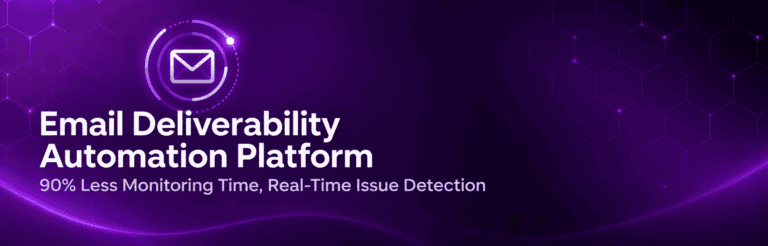
-90% Monitoring Time (15 hrs → 1.5 hrs)
View Case Study →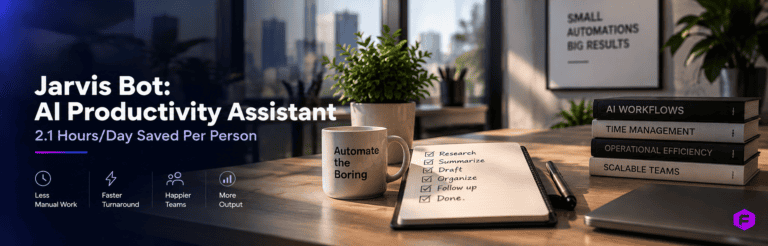
2.1 hrs Admin Time Saved Per Person/Day
View Case Study →
-70% Search Time Reduction
View Case Study →
10x Screening Capacity Increase
View Case Study →
Not automatically, but it's a real question you should have a real answer to before you start, not after. The parts of SaaS genuinely exposed to AI-agent disruption are shallow, repetitive UI workflows — the parts that are resilient are deep, vertical, compliance-aware products built on real proprietary data and workflow. We scope this honestly during the Feasibility Scope: if your idea is on the exposed side of that line, we'll tell you, and talk through how to reposition it before you build, not after.
A SaaS product is built for multiple customers (tenants) from a shared codebase, with genuine architecture decisions around tenant isolation, subscription billing, and scaling economics that a single-customer custom application simply doesn't need to solve.
Strongly recommend day one. Retrofitting multi-tenancy after you have real customers on single-tenant infrastructure is expensive and risky — real 2026 engineering data puts the cost at 2-4x higher than building it correctly from the start, and this is the exact lesson the entire ASP industry learned the hard way in the early 2000s.
Depends entirely on how much of your product is genuinely standard versus genuinely unique. Boilerplates handle auth, billing, and basic multi-tenancy well and can save real time — but they hand you a starting point you still have to build your actual product logic on top of. If more than roughly 70% of what you need is standard account/billing/auth infrastructure, a boilerplate is a reasonable starting point. If your real value is in unique workflow or data logic, a boilerplate saves you little on the part that actually matters.
Most focused SaaS MVPs take 8-12 weeks from scoping to launch, depending on the complexity of the core product and how much billing/subscription infrastructure is involved.
We only publish verifiable case studies, never invented statistics — ask on the call for the one most relevant to your situation.
A common situation. We audit what already exists, assess the real state of the codebase and architecture honestly — including whether multi-tenancy was built in correctly or would need real rework — and recommend whether to continue building on it or rebuild the specific parts that are actually problematic.
We integrate AI where it genuinely adds product value — AI-native SaaS products are seeing real, measurable advantages in customer acquisition and pricing power, but we don't add AI as a checkbox feature with no real use case behind it. We also build real, structured API access so your product can function as infrastructure other AI agents connect to, not just a human-facing UI.
Real industry data puts this at roughly 3-6 months when retrofitted after the fact, with real, meaningful audit and implementation cost on top. Building with compliance requirements in mind from the architecture phase is significantly cheaper than adding it later, which is why we scope this honestly during the Feasibility Scope if your industry requires it.
It depends on scope, complexity, and how much billing, multi-tenant, and compliance infrastructure is involved. We don't quote a number here deliberately — the free Feasibility Scope exists specifically to understand your real requirements first, so any number we give you actually reflects your project, not a generic placeholder.
You do, fully — confirmed in writing before the project starts.
Yes — vertical SaaS for regulated industries (healthcare, finance) requires real compliance-aware architecture from the start, and we scope that specifically during the feasibility phase.
We tell you directly, on the free scope call, before any money changes hands — including recommending a simpler validation approach, a boilerplate, or an honest conversation about AI-agent exposure if that genuinely serves you better first.
Yes, as an available option — SaaS products need continuous iteration based on real customer feedback, usage data, and a genuinely fast-moving competitive and technological landscape.
Claim the free SaaS Feasibility Scope, or book a strategy call directly if you already know what you're building.