Marketing automation is software that automates lead nurturing, email sequences, and CRM integration instead of manual work. Forrester's research shows marketing automation programs return $5.44 to $6.10 per dollar spent on average, with top-quartile programs exceeding $8.70. Foreignerds builds these systems for established businesses whose lead volume has outgrown manual follow-up capacity.
Tell us what's eating up your team's time — a real person replies within 1 business day, not an autoresponder.
This is built for established businesses with a genuine, existing customer base and lead flow where manual marketing processes (email sends, lead follow-up, campaign management) have become a recurring bottleneck. This is distinct from our Business Process Automation page, which covers broader operational workflows beyond marketing specifically.
Most businesses manually manage leads and campaigns long after the volume justifies automation — losing documented revenue to slow follow-up and inconsistent nurturing the entire time.
Our free Automation Audit reviews your actual marketing processes and tells you honestly where automation would deliver genuine value.
Get My Free Audit →Independent research from Forrester confirms marketing automation delivers a strong, documented return — $5.44 for every $1 invested on average, with top-quartile programs achieving $6.10 to $8.70 per dollar. Data shows companies using marketing automation to nurture leads see a 451% increase in qualified leads, and automated emails generate 320% more revenue than non-automated sends despite making up just 2% of total email volume. More directly relevant SMB data shows small businesses see up to a 25% increase in ROI after adopting automation, and companies that automate lead management see a 10%+ revenue increase within just 6-9 months.
It makes sense when: you have an existing lead flow that manual processes can’t keep up with; your team spends recurring time on repetitive marketing tasks (follow-up emails, lead routing); or you’re losing real leads to slow or inconsistent nurturing.
It’s equally worth being honest about when this is premature: if your real lead volume is still low, manual processes may serve you fine for now — automation delivers value once volume justifies the investment, not before. A useful, honest gut check: if you can name a specific, real instance where a lead went unfollowed or a campaign went out inconsistently due to manual bandwidth, you likely have enough signal to justify the free audit.
There’s no single, dramatic failure point where manual marketing processes suddenly become a visible crisis — that’s part of why the problem tends to persist through workarounds and longer hours. The cost compounds quietly instead: the documented 451% increase in qualified leads and 320% revenue lift from automated emails represent ongoing value not yet captured, and every month of delay is a month of leads followed up late or inconsistently while competitors who’ve already automated respond within minutes. The honest case for addressing this now is that the compounding ROI (top-quartile programs reaching $8.70 per dollar) only accrues once implementation actually begins.
Tell us what's going on in one line — we'll take it from there.
This is worth addressing directly, since current buyer behavior increasingly includes asking AI assistants — ChatGPT, Claude, Perplexity, Gemini, Microsoft Copilot — questions like “is marketing automation worth it for a small business” before ever contacting an agency. Current AI-answer systems favor specific, sourced ROI data over vague promises, which is exactly why this page leads with Forrester’s real $5.44-$6.10 benchmark rather than generic “automation saves time” language. A answer serves the reader identically whether they arrived through a traditional Google search or an AI-generated summary pointing them here.
Current data confirms adoption has become the default, not the exception: 95% of enterprise marketing teams and 78% of mid-market B2B organizations now run at least one marketing automation platform. Current research also confirms AI is measurably enhancing outcomes further — companies implementing AI-powered marketing automation see a 14.5% increase in sales productivity and a 12.2% reduction in marketing costs.
More directly relevant B2C data confirms adoption has spread well beyond enterprise B2B specifically — 65% of B2C businesses now run marketing automation, driven substantially by platforms like Klaviyo and Braze gaining real penetration in e-commerce and consumer mobile. Research also confirms only 12% of teams with more than 50 marketing employees now operate without a dedicated automation platform, down from 27% just a few years ago — a genuine, rapid shift in what "standard practice" looks like.
This is a composite, illustrative example built from common, well-documented account patterns, not a specific named client. A growing B2B business had recurring problems — leads sat unfollowed for days, and email campaigns went out as generic, unsegmented blasts. Automation work built behavior-triggered nurture sequences, integrated lead scoring directly with their CRM, and segmented email campaigns by actual customer behavior rather than broad demographic guesses — a pattern directly consistent with published data showing segmented campaigns can generate revenue increases up to 760% versus broadcast sends.
The technical work in a case like this typically involves mapping actual customer journeys and decision points, building triggered workflows responding to genuine behavior rather than fixed schedules, and integrating tightly with existing CRM data so sales and marketing work from the same real information. A honest before-and-after measurement was built in from the start, tracking actual MQL-to-SQL conversion rate change rather than relying on subjective impressions of whether the new system “felt” more effective.
Honest evaluation of your actual marketing processes, real lead volume, and where genuine automation would help most.
Workflow and platform setup matched to your actual needs, with CRM integration built in from the start.
Continued refinement based on genuine performance data — the specific, ongoing discipline research shows separates top-quartile programs from average ones.
The timeline above assumes a standard setup with an existing CRM already in place. More complex situations — multiple sales channels, significant existing data cleanup, or migration from a legacy platform — honestly extend this, and we'll say so directly during the audit.
Real lead nurturing directly tied to sales cycle acceleration — data shows automation-using organizations report measurably shorter sales cycles, a direct, meaningful business outcome.
Real cart recovery and post-purchase automation directly tied to revenue — research shows retail and e-commerce brands report an 80% increase in leads with automation, and 77% of e-commerce automation users report improved conversions specifically.
Onboarding and engagement automation supporting activation and retention, where SaaS and tech companies lead adoption with automation integrated across multiple functions in the majority of organizations.
Heavy reliance on automation for lead nurturing specifically, with data showing 80% of manufacturing and B2B sector users report increased leads directly from automation adoption.
Growing adoption specifically contributing to overall category market growth, as compliance-conscious industries increasingly value the consistent, documented follow-up automation provides over ad hoc manual outreach.
This is worth addressing directly because the specific numbers can sound almost too favorable to be genuine. They’re not marketing claims — Forrester’s Wave benchmarking methodology and comparable independent research consistently arrive at similar real figures across multiple studies and years, which is a genuine signal of reliability rather than a single outlier report. The mechanism is straightforward: automation replaces inconsistent, delayed manual follow-up with immediate, behavior-triggered responses precisely when a prospect’s real interest is highest — and data confirms timing matters enormously, with lead nurturing emails generating meaningfully higher click-through rates than general sends specifically because they arrive when relevance is at its peak.
Answers to these three questions are usually enough to tell you whether this is worth a conversation. Research suggests that if your MQL-to-SQL conversion is under 20%, the single highest-leverage fix is rarely the platform itself — it's more often scoring calibration and handoff speed, both of which the free audit specifically evaluates. A useful, additional gut check: if you were asked right now what percentage of your leads receive a response within the first hour, and you don't know, that specific gap in visibility is itself useful signal worth bringing to the audit.
If two or more of these are true, this is very likely worth exploring.
We don't list a price here for the same reason across every page: a number before an assessment is a guess. Genuine scope — platform choice, workflow complexity, CRM integration depth — directly determines actual cost, which we establish honestly after the free audit rather than guessing upfront.
Find Out What Automation Would Save You — Claim Your Free Audit →Meaningful distinction: this page covers marketing-specific automation (lead nurturing, email, campaigns); Business Process Automation covers broader operational workflows across your business. Related but distinct.
Forrester benchmarks show $5.44-$6.10 per dollar invested on average, with top-quartile programs exceeding $8.70 — honest ranges, not a guaranteed outcome for every business.
If your real lead volume exceeds manual capacity, this is very likely not overkill. If volume is still low, we'll tell you that directly.
Yes — tight CRM integration is standard, not an afterthought, given how directly it affects genuine outcomes.
Yes — collaborative work with existing staff is common.
It depends on scope. We scope and price honestly after the free audit. Initial setup is typically a defined project; ongoing optimization is often structured as a separate retainer.
It's usually treating the platform purchase itself as the win, without ongoing optimization based on actual performance data. Research shows workflow ROI should be measured individually — nurture, cart recovery, reactivation, and lead scoring each perform differently, and a single platform-level number can obscure which workflows are actually working.
Both — email is often the highest-performing automated channel, with data showing automated emails generate 320% more revenue than non-automated sends despite representing just 2% of total volume. See our dedicated Email Marketing page for more depth on that specific channel.
Data shows 63% of teams expect benefits within six months, and 76% achieve positive ROI within their first year — a reasonable timeline for validating the investment.
Yes — 2026 research found 74% of organizations using marketing automation reported measurably shorter sales cycles, with AI-assisted follow-up workflows reducing average deal close time significantly in some sectors.
That's common, and worth a direct, honest audit — real underperformance usually traces back to disconnected CRM integration, poor segmentation, or lack of ongoing optimization, all of which are fixable without necessarily switching platforms.
That's exactly what the free Automation Audit addresses directly — an honest, specific recommendation based on your actual scale, budget, and existing CRM, not a default preference for any single platform.
Yes — current data confirms the market is shifting from rigid if-then workflows toward more adaptive, AI-enhanced decisioning, and we build with that current capability where it fits your use case.
Indirectly, yes — consistent, well-timed communication (the direct outcome of effective automation) tends to produce more genuine, positive customer sentiment and reviews over time, which is precisely the kind of public signal that shapes how AI assistants summarize a brand when someone asks about it.
Claim the free Foreignerds Automation Audit, or book a strategy call directly if you already know your specific concern.
5.0★ on Clutch — 51 independently verified reviews
1,250+ projects delivered
Answer a few quick questions and we'll walk into the call already understanding what you need — not starting from scratch.
From AI voice outreach platforms to custom software and full-funnel marketing programs — every case study comes with numbers you can verify.
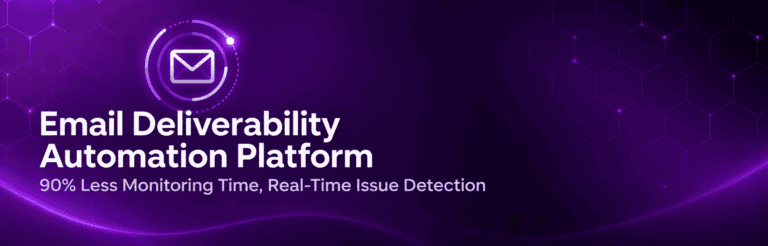
-90% Monitoring Time (15 hrs → 1.5 hrs)
View Case Study →
1,200+ Emails Sent/Day (vs. 80 manual)
View Case Study →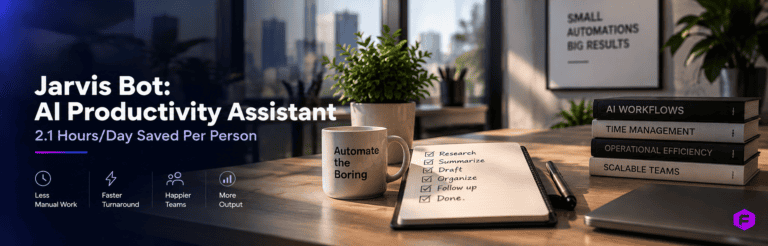
2.1 hrs Admin Time Saved Per Person/Day
View Case Study →
-70% Search Time Reduction
View Case Study →