An AI marketing agency uses machine learning, automated workflows, and data-driven systems to run, optimize, and personalize marketing campaigns faster than a traditional agency working manually. Pricing, actual capability, and genuine AI usage vary enormously between firms using this label, which makes evaluating one harder than the marketing copy on most agency websites suggests.
Why This Is Harder to Evaluate Than It Looks
Search for “AI marketing agency” and most of what ranks is either another AI marketing agency describing itself in the best possible terms, or a listicle ranking ten agencies with no disclosed methodology. Neither is a neutral source. The honest starting point is this: “AI marketing agency” is not a regulated or standardized term. Some firms genuinely run AI-driven optimization across live campaigns. Others have simply added the phrase to their homepage after adopting ChatGPT for first drafts, the same as thousands of traditional agencies now do. The label alone tells you very little.
What a Genuinely AI-Driven Agency Actually Does Differently
Based on how the capability is described across the firms actually building it, three things separate a real AI-driven marketing operation from a traditional agency with an AI-adjacent tagline:
- Real-time optimization — adjusting live ad campaigns automatically based on live performance data, rather than a person reviewing dashboards weekly and manually reallocating budget.
- Genuine personalization at the individual level — tailoring messaging to an individual user’s behavior rather than broad audience segments, which requires actual data infrastructure, not just a smarter copywriting tool.
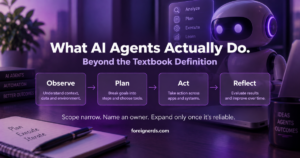
- Workflow automation across repetitive tasks — using AI agents to handle data gathering, first-draft copy, basic design generation, and lead response, freeing human strategists for judgment calls machines genuinely can’t make yet.
A firm doing all three is meaningfully different from a traditional agency. A firm doing none of these but using the phrase in its branding is not — and it’s a completely fair question to ask directly in a first conversation.
What It Actually Costs
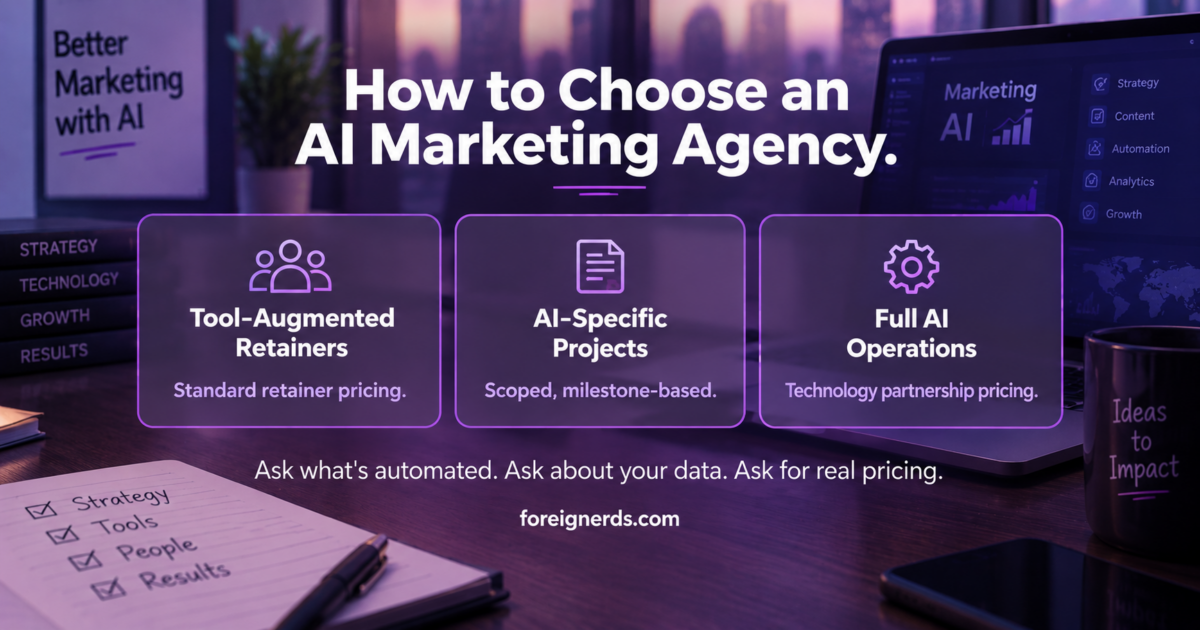
This is the question every buyer has and almost no agency website answers directly. Based on how AI-augmented marketing services are typically structured, most engagements fall into one of three tiers:
- Tool-augmented retainers — a traditional marketing retainer where the agency uses AI tools internally to work faster. Pricing here is usually similar to a standard marketing retainer, since the AI is an efficiency layer for the agency, not a separately billed capability.
- AI-specific project work — building a specific AI-driven system (a personalization engine, an automated campaign optimization pipeline) as a defined project with its own scope and price, separate from ongoing marketing spend.
- Full AI-driven marketing operations — an agency running the actual campaign infrastructure with AI at the center, typically priced closer to a technology partnership than a traditional marketing retainer, reflecting the deeper technical build involved.
Any agency unwilling to explain which of these three actually describes their offering, in plain terms, in a first conversation, is a signal worth taking seriously.
A Practical Framework for the Actual Decision
Rather than starting from “which AI marketing agency is best,” a more useful starting question is what specific bottleneck is driving the search in the first place. Three common starting points lead to three different right answers:
| Your actual situation | What to look for |
|---|---|
| Campaigns work but take too long to launch and adjust | An agency with genuine real-time optimization capability — ask specifically how campaign adjustments happen without a human reviewing dashboards manually |
| Messaging feels generic, conversion rates are flat | An agency with true individual-level personalization infrastructure, not just audience segmentation with an AI label attached |
| Internal team is overwhelmed by repetitive production work | An agency or partner focused on workflow automation for first-draft content, data gathering, and lead response — the mechanical layer, not the strategic one |
Naming the actual bottleneck before evaluating any specific agency makes the four-question conversation above far more productive, because it turns a generic capability pitch into a direct answer to a specific problem.
How Agency Pricing Actually Breaks Down in Practice
Beyond the three broad tiers above, a few specific patterns show up consistently across how AI-augmented marketing engagements are actually structured. Tool-augmented retainers tend to track closely with traditional marketing retainer pricing in the same market and vertical, since the AI layer here is an efficiency gain for the agency’s own team rather than a separately built system. AI-specific project work is priced more like a software or data engineering project — scoped deliverables, defined timelines, and a fixed or milestone-based cost — because building an actual personalization or optimization system genuinely resembles a technical build more than a marketing engagement. Full AI-driven marketing operations sit closest to a technology partnership in both pricing structure and the depth of onboarding required, often including a genuine data integration phase before any campaign work begins — which is also why unrealistically fast timelines from a firm offering this tier are worth treating skeptically.
None of these tiers is inherently better — the right one depends entirely on which specific bottleneck from the table above is actually driving the search, and a competent agency in any tier should be able to explain, specifically, which of the three describes their own offering without hedging.
Red Flags Worth Naming Directly
No willingness to show the actual system, only the results
Case studies showing before/after metrics are useful, but a firm that can’t or won’t describe the actual mechanism producing those results — which tools, what data, what’s automated versus human-reviewed — is asking for trust without transparency. A legitimate AI-driven operation can explain its own system.
Every capability is “powered by AI” with no specifics
“AI-powered” attached to every service on a page, with no named tool, model, or specific workflow behind any of them, is usually a branding decision more than a technical one. This isn’t necessarily dishonest — the underlying work might still be good — but it means the AI framing isn’t carrying real information, and that’s worth knowing before evaluating the agency on that basis.
No discussion of what still requires a human
Every genuinely AI-augmented marketing operation still has human strategists making judgment calls current AI can’t reliably make — brand voice decisions, crisis response, creative direction. An agency that implies AI has replaced strategic thinking entirely, rather than accelerated the mechanical parts of it, is overselling.
Questions Worth Asking in a First Call
These four questions, asked directly, surface more real information than most agency sales pages:
- “Walk me through exactly what’s automated versus human-reviewed in a typical campaign.” A specific answer, not a general capability list, is the signal to look for.
- “What happens to our data, specifically?” — where it’s stored, whether it trains any shared model, who else can see it.
- “Can I see an example of the actual output before it was edited by a human?” This surfaces whether the AI layer is doing real work or mostly marketing language.
- “What’s your pricing model for this specifically, not your general retainer rate?” A clear, direct answer here is a genuinely good sign.
When a Traditional Agency Is Actually the Better Fit
Not every business benefits more from an AI-first agency than a traditional one. If the marketing need is primarily creative and brand-building — a campaign that depends on a genuinely original creative concept rather than data-driven optimization at scale — a traditional creative agency with strong strategists may outperform an AI-first operation that’s better suited to performance marketing at volume. The honest answer to “should I hire an AI marketing agency” is usually “it depends on whether your bottleneck is creative judgment or optimization at scale,” not a blanket yes.
How This Connects to a Broader AI Adoption Decision
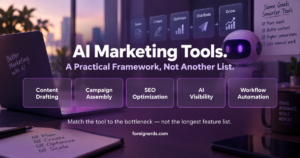
Choosing an AI marketing agency is really a narrower version of a broader question many businesses are working through right now: how to evaluate any AI implementation partner, not just a marketing-specific one. The same evaluation discipline — asking what’s actually automated, what happens to your data, and what the real pricing model is — applies whether you’re hiring for marketing specifically or a broader AI initiative. It’s also worth understanding which specific AI marketing tools actually sit behind an agency’s claims, since a firm’s tool stack is often the most concrete, checkable thing behind an “AI marketing agency” label.
What Good Looks Like Once You’ve Chosen One
The agencies genuinely delivering value here share a pattern: they can explain their own system in plain language without deflecting to case studies, they’re specific about pricing rather than vague, they’re honest about what still requires human judgment, and they treat data handling as a real conversation rather than a line in a contract nobody reads. None of this requires picking the flashiest AI branding — it requires the same due diligence you’d apply to any vendor relationship where the actual mechanism matters more than the marketing language describing it.
How This Differs From Choosing a Traditional Digital Marketing Agency
Traditional agency evaluation focuses heavily on portfolio work, creative sensibility, and cultural fit with the strategist team you’ll work with directly. Those factors still matter with an AI-driven agency, but they sit alongside a second, more technical layer of diligence that traditional agency selection rarely requires: understanding what’s actually automated, what data infrastructure exists behind the personalization claims, and whether the pricing model reflects a technology build or a standard retainer with an AI label attached. Skipping this second layer and evaluating an AI marketing agency purely on the same criteria as a traditional one is the most common mistake buyers make in this specific decision — the portfolio can look identical between a firm doing genuine AI-driven work and one that isn’t, because the difference lives in the mechanism, not the output.
This is also why case studies alone are an incomplete evaluation tool here in a way they aren’t for traditional agency selection. A strong result achieved through genuine automation and a strong result achieved through a talented human team using ChatGPT for first drafts can look identical in a case study. The mechanism behind the result is what determines whether that result is repeatable at the scale and speed an “AI-driven” positioning implies — which is exactly why the four direct questions above matter more than the portfolio review that would normally come first in a traditional agency search.
A Short Glossary for This Space
A few terms come up repeatedly in agency conversations and are worth understanding precisely rather than nodding along to: real-time optimization refers to automated, live adjustments to active campaigns rather than scheduled manual reviews. Hyper-personalization means messaging tailored to an individual user’s behavior, not a broad demographic segment. Workflow automation covers the mechanical, repetitive tasks — data gathering, first-draft copy, lead routing — that AI agents handle so human strategists can focus on judgment calls. None of these terms guarantee quality on their own; they describe capability categories, and the actual evaluation still comes down to whether a specific agency can demonstrate each one concretely rather than simply naming it.
Where the Tool Question Fits Alongside the Agency Question
Part of evaluating any AI marketing agency honestly is understanding what’s actually behind their claims — and a firm’s own tool stack is often the most concrete, checkable evidence available. A practical framework for evaluating AI marketing tools directly is worth reviewing before any agency conversation, since it gives you the vocabulary to ask sharper questions about what’s actually automated versus what’s a person using ChatGPT behind the scenes. The same applies if the specific bottleneck is social content specifically rather than marketing broadly — the tool-selection discipline for social media management runs into nearly identical evaluation traps.
If what you actually need is a genuine marketing automation partner rather than a full agency relationship, that’s worth naming explicitly in a first conversation — the two are related but distinct engagements, and a firm that can’t clearly distinguish which one it’s offering is exhibiting the same vagueness problem described throughout this piece.
None of these distinctions require picking a side before the first conversation — they exist to make that first conversation sharper, so the agency you eventually choose ends up answering the actual question you meant to ask, not the one their pitch deck was built to answer.
Key Takeaways
- “AI marketing agency” isn’t a regulated term — some firms genuinely run AI-driven optimization across live campaigns, others have simply added the phrase after adopting ChatGPT for first drafts.
- Three things separate a genuinely AI-driven agency from a traditional one with an AI-adjacent tagline: real-time campaign optimization, individual-level personalization, and real workflow automation.
- Pricing falls into three tiers — tool-augmented retainers (priced like standard retainers), AI-specific project work (priced like a technical build), and full AI-driven operations (priced like a technology partnership).
- Four questions surface more real information than any sales page: what’s actually automated versus human-reviewed, what happens to your data, can you see unedited output, and what’s the specific pricing model.
Frequently Asked Questions
What is an AI marketing agency?
A firm that uses machine learning, automated workflows, and data-driven systems to run, optimize, and personalize marketing campaigns faster than a traditional agency working manually. The term is not standardized, so actual capability varies significantly between firms.
How much does an AI marketing agency typically charge?
It depends on the tier of engagement. Tool-augmented retainers track close to standard marketing retainer pricing. AI-specific project work is priced more like a software project with defined scope and milestones. Full AI-driven marketing operations are typically priced closer to a technology partnership.
How do I know if an agency is genuinely AI-driven or just using the label?
Ask them to walk through exactly what is automated versus human-reviewed in a typical campaign, and ask to see actual AI-generated output before human editing. Vague, general answers are a signal the AI framing may be more marketing than mechanism.
What should I ask an AI marketing agency before signing a contract?
Ask what specifically is automated versus human-reviewed, what happens to your data, whether you can see unedited AI output, and what their pricing model is for that specific service rather than a general retainer rate.
Is an AI marketing agency always better than a traditional one?
No. If your bottleneck is genuinely creative and brand-building work, a traditional agency with strong strategists may outperform an AI-first operation better suited to performance marketing and optimization at scale.
What does real-time optimization actually mean for an AI marketing agency?
It means live ad campaigns are adjusted automatically based on live performance data, rather than a person manually reviewing dashboards on a schedule and reallocating budget after the fact.
What are red flags when evaluating an AI marketing agency?
An unwillingness to describe the actual system behind their results, every service labeled "AI-powered" with no specifics behind any of them, and no acknowledgment of what still requires human judgment are all worth taking seriously.
Does an AI marketing agency replace the need for human marketing strategists?
No. Even the most genuinely AI-driven operations still rely on human strategists for judgment calls current AI cannot reliably make, including brand voice decisions, crisis response, and creative direction.
What is the difference between AI marketing tools and an AI marketing agency?
AI marketing tools are individual software products a business or agency can use directly. An AI marketing agency is a service provider that builds and manages an AI-driven system on a client's behalf, often using several such tools as part of a larger operation.
How should I choose between the three AI marketing agency pricing tiers?
Match the tier to your actual bottleneck: tool-augmented retainers for general efficiency, AI-specific project work for a defined system build, and full AI-driven operations when campaign infrastructure itself needs to be rebuilt around AI at the center.
Can an AI marketing agency work alongside my existing marketing team?
Yes, and it often should. Many engagements are structured as a specific AI-driven capability — personalization, real-time optimization — layered onto an existing team rather than replacing it entirely, which is worth clarifying explicitly during scoping.
What is the difference between hiring an AI marketing agency and a marketing automation partner?
An AI marketing agency typically runs broader campaign strategy and execution with AI at the center. A marketing automation partner focuses specifically on connecting tools and channels into one coordinated system. The right choice depends on whether the need is strategic or primarily technical integration.