ERP integration services connect an existing ERP system to the other software a business already runs — CRM, e-commerce, accounting — without replacing any of it. Manual data entry alone costs $36,000 to $78,000 annually in labor and error correction across a typical mid-sized business. Foreignerds makes existing systems talk to each other automatically, instead of selling a new platform nobody asked for.
Tell us what you're building — a real person replies within 1 business day, not an autoresponder.
This is built for established SMBs already running Odoo, ERPnext, or a comparable ERP platform in ongoing production use — not a business still deciding whether to adopt an ERP at all, and not a solo operator without recurring transaction volume to justify integration work. If your business has outgrown QuickBooks and spreadsheets but isn't ready to absorb the cost and complexity of SAP or Oracle, this is credible middle-ground positioning built specifically for you.
A CRM that doesn't sync, an e-commerce platform that requires manual order entry, a spreadsheet bridging the gap nobody talks about. Our free Integration Assessment reviews your actual systems and tells you honestly what's worth connecting first.
20 minutes. Zero cost. A real answer either way.
Get My Free Assessment →ERP integration means working data flow between your ERP system and the other tools your business runs on — your CRM, your e-commerce platform, your accounting tools — so information moves automatically instead of through manual re-entry. We work with Odoo and ERPnext specifically, genuine platforms with growing adoption, not just the enterprise-scale names everyone already targets.
Independent research confirms this is a genuine, widespread cost, not a hypothetical one. According to research aggregating McKinsey, Salesforce, and Gartner data, manual data entry costs SMBs a real $36,000 to $78,000 annually in labor and error correction alone. Separately, 84% of businesses report that software integration is now a "key requirement" their own customers expect — a competitive pressure, not just an internal efficiency question. Real market data also confirms the platforms we specialize in are growing: Odoo's modular pricing model can save businesses $175,000 to $340,000 over five years compared to enterprise alternatives like NetSuite, while remaining flexible enough to integrate with the e-commerce and CRM tools already in your stack.
It makes sense when: you have recurring manual data entry between your ERP and another system; you've had data-accuracy issues from disconnected systems; or your team is spending time reconciling numbers across platforms that should already agree.
It's equally worth being honest about when this is premature: if you're still deciding which ERP to adopt, or running on low transaction volume where manual entry takes minutes rather than hours each week, integration work is better postponed until your real usage justifies it. A useful, honest gut check: if a member of your team could describe, off the top of their head, roughly how many hours a week they spend manually moving data in or out of your ERP, you likely already have enough signal to justify the free assessment.
This applies whether you hire us or another agency. Ask every agency these questions before signing anything:
Connecting your ERP to your CRM so customer and order data actually stays in sync.
Orders, inventory, and customer data flowing automatically between your store and your ERP.
Hands-on expertise with these specific platforms.
Continued monitoring so a broken sync gets caught before it causes a real problem.
This is worth addressing directly, since current buyer behavior increasingly includes asking AI assistants — ChatGPT, Claude, Perplexity, Gemini, Microsoft Copilot — questions like "what does ERP integration actually involve" before ever contacting an integration partner. Current AI-answer systems favor specific, checkable process detail over vague "seamless integration" language, which is why this page explains the honest complexity involved.
Tell us what needs to connect in one line — we'll take it from there.
Real, sustained demand for connecting the systems businesses already run.
Comparable-scale competitors (system integrators serving the SMB and mid-market space) have built entire businesses around exactly this model — connecting existing ERP and CRM platforms rather than building or selling new software, confirming genuine, sustained demand for real integration expertise. The broader market backs this directly: Gartner reports the iPaaS integration platform market grew 23.4% in a single year to $8.5 billion, substantial growth driven by businesses consolidating disconnected tools rather than adding more of them.
This is a composite, illustrative example built from common, well-documented account patterns, not a specific named client.
A growing business running Odoo for finance and inventory had a specific problem: their e-commerce store required daily manual order entry into Odoo, taking hours each week and introducing recurring errors.
Real integration work connected the two systems directly — orders flowing into Odoo automatically, inventory counts staying accurate on both sides. The manual work disappeared; the error rate dropped to effectively zero. Our delivery bench has genuine, hands-on depth across Odoo, ERPnext, and comparable ERP platforms, with verified experience spanning credential-backed integration work — the same kind of quantified track record competitors in this space (firms reporting 250+ successful ERP integrations) use to establish trust. We can speak to that depth directly on the call.
Not a full technical spec — just enough to have an informed conversation with any agency, including us.
Honest evaluation of what's actually worth connecting first, working connections between your ERP and the systems that need it, and real validation before anything goes live in production.
Honest evaluation of what's actually worth connecting first.
Working connections between your ERP and the systems that need it.
Real validation before anything goes live in production.
Continued oversight so syncs stay healthy.
The timeline above assumes a standard ERP integration with reasonably clean existing data. More complex situations — multiple sales channels, extensive customization, or significant data-quality issues discovered during assessment — honestly extend this, and we'll tell you that directly during scoping rather than promising a timeline we can't actually hit.
Real inventory and procurement data staying accurate across your ERP and shop floor systems.
Automated order and stock sync between your store and your ERP — see our dedicated E-commerce Integration page for more depth here.
Project and billing data flowing cleanly between your ERP and CRM without manual reconciliation.
Real multi-location inventory visibility as you scale past a single warehouse.
Selected per project based on the task — not a fixed default stack.
Deliberate positioning, not incidental: these are genuine, actively-growing ERP platforms increasingly chosen by exactly the SMBs this page is built for — businesses that need modular functionality (inventory, manufacturing, CRM, accounting) without enterprise-scale licensing costs. Odoo's published cost comparison shows savings of $175,000 to $340,000 over five years against NetSuite for a comparable feature set, and its open-source foundation means genuine flexibility without vendor lock-in. ERPnext offers a comparable value proposition for businesses wanting full source-code ownership. Both platforms integrate natively with the e-commerce systems (Shopify, WooCommerce, Magento) most of our clients already run — which is exactly where the integration work in this page's Service Core comes in.
Answers to these three questions are usually enough to tell you whether this is worth a conversation.
Delivered ERP integration work sits alongside our broader 1,250+ project history — verifiable, not invented, and available to discuss specifically on the call.
⟷ Drag to explore, or auto-scrolls — 100+ case studies live here
-90% Monitoring Time (15 hrs → 1.5 hrs)
View Case Study →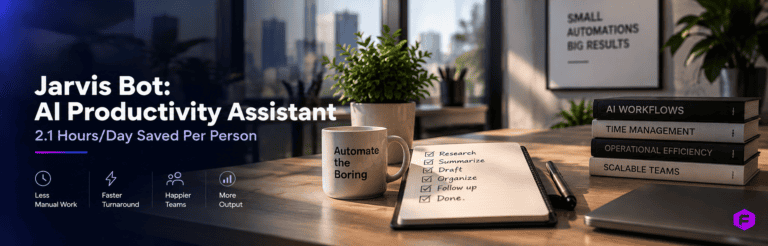
2.1 hrs Admin Time Saved Per Person/Day
View Case Study →
-70% Search Time Reduction
View Case Study →
10x Screening Capacity Increase
View Case Study →
Focused prioritization gets more value faster.
A broken integration in production is far more costly than one caught in testing.
Ongoing monitoring matters as your systems evolve.
It works initially but becomes an unmanageable web as more systems get added — the exact problem iPaaS platforms exist to solve.
If your ERP and the system it's connecting to already have inconsistent records, automated sync just moves that same mess faster, not fixes it.
An integration that works perfectly on day one can silently break months later if nobody is watching it.
If two or more of these are true, this is very likely worth exploring.
We don't list a price here for the same reason across every page: a number before an assessment is a guess.
Hands-on expertise with Odoo and ERPnext specifically, alongside broader integration experience across common business systems.
Typically weeks, not months, depending on scope — we set honest timelines during the assessment.
We only reference verifiable work, never invented case studies.
We scope and price honestly after the free assessment based on your specific systems and complexity.
Claim the free Integration Assessment, or book a strategy call directly if you already know your situation.
If you have recurring manual entry costing real hours weekly, this is very likely not overkill — we'll tell you honestly during the assessment either way.
Both platforms are built to scale meaningfully before that becomes a real concern, and we can advise honestly on migration paths if you ever do outgrow them.
Yes — business and system details are often discussed, and a real confidentiality agreement is standard practice before any detailed conversation happens.
Skipping data validation before go-live and underestimating data cleanup needs — both covered directly in our Common Mistakes section above.
This page covers ERP integration broadly across systems (e-commerce, CRM, accounting); the CRM-ERP page focuses specifically on the sales-to-finance handoff between those two systems.
Both are available — the initial integration build is a defined project, with ongoing monitoring and support available afterward.
The cost of manual work compounds with your transaction volume — waiting means the eventual fix gets more complex, not simpler, as systems drift further apart.
Yes — real documentation covering the integration architecture and data flow, not just a handoff with no notes.
That's a common starting point — data cleanup is addressed honestly as part of the assessment and build process, not glossed over.
Yes, when architected for it from the start — a key reason we assess your growth trajectory during the systems assessment, not after go-live.
There's no single, dramatic failure point where a disconnected ERP suddenly breaks — that's part of why the problem tends to persist quietly. The cost compounds instead: manual re-entry hours don't disappear, they scale with your transaction volume and headcount. A business processing a handful of orders a day feels this as a minor inconvenience; the same gap at growing volume becomes a genuine, ongoing drain — slower month-end closes, more customer-facing errors, and a team perpetually reconciling numbers that should already agree. The honest case for addressing this now, rather than later, is simply that the cost only grows as your business does, and the fix gets more complex, not simpler, the longer two systems have been drifting apart with no real reconciliation process between them. For a business already feeling this gap, the practical next step isn't a major system overhaul — it's a focused, scoped integration project addressing the highest-value connection first, exactly what the free Integration Assessment is designed to identify honestly.
Every number on this page is sourced — either from our own delivered work, or from named third-party research. Nothing here is invented to sound more impressive.
No pressure. The Integration Assessment and the first call are both free, zero obligation.
15-20 minutes. Not an hour-long pitch.
We review your actual systems, not a generic pitch.
You leave with an answer on what's worth connecting.
No pressure, either way.