RAG, or retrieval-augmented generation, development builds AI systems that pull from a business's own real, current data before generating an answer. 60% of production LLM applications now use retrieval-augmented generation as their core architecture, and the global RAG market is projected to grow to $81.51 billion by 2035. Foreignerds builds RAG systems grounded in a business's actual documents and data.
Tell us what you're building — a real person replies within 1 business day, not an autoresponder.
Fixing them the expensive way first is a common, avoidable mistake. Our free RAG Feasibility Scope tells you honestly whether retrieval-augmented generation is the right architecture for your use case, and what a real pipeline would need to look like — before you commit budget.
20 minutes. Zero cost. A real answer either way.
Get My Free Scope →Retrieval-augmented generation is a genuinely recent idea, not an established discipline with decades of history behind it. The technique traces to a specific, dated paper: "Retrieval-Augmented Generation for Knowledge-Intensive NLP Tasks," published by Patrick Lewis and colleagues at Facebook AI Research and University College London, submitted in May 2020 and presented at NeurIPS 2020. The paper proposed combining a model's trained knowledge (parametric memory) with an external retrieval step (non-parametric memory) — letting a language model look up real information at answer time instead of relying purely on what it memorized during training. For nearly two years, RAG remained a research technique with limited commercial application. That changed abruptly when ChatGPT launched in late 2022 and immediately exposed a limitation every business using it ran into within days: it could only answer from its training data, with a fixed cutoff date, and had zero knowledge of any business's internal documents, current pricing, or last week's events. RAG was the direct, practical answer to that exact problem — and adoption has moved unusually fast for a technique this young, becoming what much of the industry now calls the foundational solution to LLM hallucination on knowledge-intensive tasks.
If your need is answering questions from general public knowledge — explaining a concept, drafting generic content, brainstorming — you don't need RAG. A general-purpose model already handles that well, today, for the cost of a subscription. RAG earns its cost specifically when answers need to come from your own private, current, or frequently-changing data.
RAG makes sense when: you need an AI system to answer accurately from your own documents, product data, or internal knowledge base; your information changes often enough that retraining a model on it would be impractical; you need to cite or point back to a real source for every answer; or you've already tried a general-purpose model and it either doesn't know your data or confidently makes things up about it.
This applies whether you hire us or another agency. Ask every agency these questions before signing anything:
Selecting and configuring the right vector database for your actual data volume and query patterns — Pinecone, Weaviate, Qdrant, or a self-hosted option — including index configuration, metadata filtering setup, sharding strategy for larger datasets, and capacity planning so retrieval stays fast as your data grows, not just in the initial demo with a few hundred test documents.
The specific technical work that determines whether retrieval actually works: choosing chunk size and overlap appropriate to your content type (a legal contract chunks differently than a support ticket transcript), selecting the right embedding model for your domain, and structuring metadata so retrieval can filter by source, date, department, or category, not just semantic similarity alone.
Building the retrieval logic itself — hybrid search combining semantic and keyword matching where it improves accuracy, re-ranking to surface the genuinely most relevant chunks, multi-hop retrieval for questions that require combining information from more than one source, and a real evaluation framework that measures retrieval quality against test queries before anything ships, not after a customer notices a bad answer.
For use cases that need more than a single retrieve-then-generate pass — agentic RAG that plans multi-step retrieval, decides when more context is needed, and can call tools or query multiple systems before answering; graph-based retrieval for data with real relational structure; adaptive retrieval that routes simple questions through a fast path and complex ones through deeper reasoning. Not every project needs this layer, and we scope honestly whether yours does.
Connecting the RAG pipeline to your actual application, with monitoring for retrieval quality drift as your underlying data changes, fallback behavior when nothing relevant is found, and a clear path to extend the pipeline to new data sources without a full rebuild.
This is the specific, itemized scope — not a vague "RAG development services" claim. Every engagement includes:
Tell us what you're working with in one line — we'll take it from there.
It's worth being direct about something most agencies gloss over: "RAG" stopped meaning one single architecture years ago, and treating it as a single, fixed pattern is itself a common source of underperforming projects. The simple retrieve-a-few-chunks-then-generate pipeline that defined early RAG implementations is now the baseline, not the ceiling — 2026's production systems increasingly layer additional capability on top of it, and the layer you actually need depends entirely on your real use case.
Hybrid RAG — combining semantic (meaning-based) search with traditional keyword search — has become the production baseline for accuracy and robustness, since pure semantic search alone misses exact-match queries (a specific product SKU, a legal clause number) that keyword search catches naturally. Agentic RAG goes further: instead of a fixed retrieve-then-generate sequence, an agent plans its own retrieval strategy, decides when it has enough evidence to answer versus needs another retrieval pass, and can invoke tools or query multiple systems mid-task. This is genuinely one of the fastest-growing segments in enterprise AI — the agentic RAG market specifically is projected to grow from $3.8 billion in 2024 to $165 billion by 2034, reflecting real enterprise demand for retrieval systems that reason and act, not just fetch and summarize.
Graph RAG, meanwhile, builds a knowledge graph from your documents to support the kind of cross-document, relationship-aware questions plain vector search structurally can't answer well — useful specifically where your data has real relational structure (org charts, product dependencies, case law citations) rather than isolated facts. None of this means every project needs the most advanced architecture available; it means the right choice is a real technical decision made during scoping, not a default applied regardless of fit.
The market's growth reflects genuine, fast enterprise adoption, not hype alone. Multiple 2026 market analyses converge on the same trajectory: the global RAG market reached roughly $3.33 billion in 2026 and is projected to grow to $81.51 billion by 2035, a 42.7% compound annual growth rate. Separate industry tracking found RAG framework adoption has surged 400% since 2024, and 60% of production LLM applications now use retrieval-augmented generation as their core architecture — a genuinely fast shift from research technique to default enterprise pattern in under four years.
Adoption is concentrated where the technology's real strength — grounding answers in verifiable, current data — matters most. Market research consistently finds large enterprises hold roughly 72-75% of current RAG market share, driven by their need for data governance and regulatory compliance at scale, and healthcare, finance, legal, and government are the leading adopting industries specifically because they require fact-checked, explainable outputs, not just fluent ones. The vector database ecosystem that makes RAG practical at scale is itself young: vendors like Pinecone, Weaviate, and Qdrant have made enterprise-grade vector search commercially viable only in the past few years, and cloud-based, managed RAG infrastructure captured roughly 82% of deployments in 2025 as businesses chose managed platforms over self-hosting the underlying complexity.
Project scope varies enormously across this category, from a focused, single-use-case pipeline to an advanced, multi-system enterprise deployment, with ongoing operational costs (vector database hosting, LLM API usage) typically running separately from the build itself. That real variation is exactly why we don't lead with a number — your actual scope is what determines your actual investment, which is what the free Feasibility Scope exists to establish honestly, before any pricing conversation happens.
This is a composite, illustrative example, not a specific client.
Say a mid-sized insurance brokerage wants staff to be able to ask natural questions about policy details, underwriting guidelines, and past claims precedent instead of manually searching a disorganized document repository. Week 1 confirms RAG is the right architecture — the need is accurate retrieval from existing, frequently-updated documents, not specialized behavior or tone, so fine-tuning would be the wrong, more expensive tool here. Weeks 2-5 build the retrieval pipeline against the firm's actual policy documents and claims records, with chunking tuned specifically for how insurance documents are structured, hybrid search added since underwriters frequently search by exact policy number, and an evaluation framework testing real staff questions pulled from actual past inquiries. Week 6 launches to a small team first, with every flagged low-confidence answer reviewed before wider rollout, catching retrieval gaps while the audience is still small.
An honest feasibility check on whether retrieval-augmented generation is the right fit before any build begins, real grounding work matched to your actual data, and a staged launch — not a demo that never reaches production.
Confirming RAG is the right architecture for your actual need, and mapping which data sources are genuinely usable.
Development of the full retrieval pipeline against real data, with evaluation running from the start.
Rollout to a limited group first, retrieval quality reviewed, before expanding to full deployment.
Ongoing — Monitor & Retune. Retrieval quality can drift as your underlying data changes; a pipeline with no review cadence degrades quietly.
Retrieval-grounded research assistants trained on real case history and firm precedent, with mandatory human review before anything reaches a client — often a strong fit for graph-based retrieval given how densely cross-referenced case law and contract clauses actually are.
Documentation and knowledge-base assistants grounded in real policy and procedure documents — never used for anything resembling clinical judgment, with strict access scoping around anything patient-related.
Internal knowledge retrieval grounded in real, private compliance and product documentation, helping staff answer complex policy questions consistently — a sector where explainability requirements make evaluation and citation tracing especially important, not optional.
Policy, underwriting, and claims-history retrieval that helps staff find accurate answers instantly instead of searching disconnected document repositories.
Technical documentation, product catalog, and customer-facing knowledge retrieval grounded in real, current inventory and specification data rather than a static FAQ that goes stale the moment a product line changes.
Support responses grounded in your actual current product documentation and account data, not a generic script that goes stale the moment something changes.
Applying a basic 2023-era retrieve-then-generate pipeline to a use case that genuinely needs hybrid search, multi-hop retrieval, or agentic planning produces a system that technically works but underperforms what the category can actually deliver in 2026.
Deploying a RAG pipeline based on "it looked good in a demo" instead of systematic retrieval-quality scoring means real accuracy problems surface with customers, not in testing.
A chunking strategy tuned for legal documents applied blindly to conversational support tickets or tabular data will quietly hurt retrieval quality.
A system with no honest "I don't have enough information" path will generate a plausible-sounding wrong answer instead.
Underlying data changes; a RAG pipeline with no monitoring or re-indexing cadence gets stale and starts missing genuinely current information.
RAG solves "answer accurately from real data" — it does not change how a model behaves, reasons, or speaks. Using it to try to change tone or specialized behavior is the wrong tool for that specific job.
Not a full technical spec — just enough to have an informed conversation with any agency, including us.
If two or more of these are true, RAG is very likely the right architecture to scope — the free assessment will confirm the details.
None of these are permanent — they're simply signs to confirm the real fit with a free scope before committing budget.
Most of the agencies we researched building this page (Rishabh Software, Appinventiv, Geniusee, Devox Software, and others) are genuinely capable RAG and AI development specialists — that's the whole of what they do, and they do it well. Here's the honest, real difference: we build RAG systems as one part of a broader capability that includes the software the RAG pipeline eventually lives inside, the SEO and content work that makes a product findable once it's built, and the marketing that turns a working system into real customers. A RAG specialist who only ever sees the retrieval layer misses real context a team building your product, your search visibility, and your growth strategy together doesn't. You're not required to use every service we offer — but the option to bring one team into a project that would otherwise mean coordinating three separate vendors is a real, practical advantage, not a sales pitch.
Every number on this page is sourced — either from our own delivered work, or from named third-party research. Nothing here is invented to sound more impressive.
No pressure. The assessment and the first call are both free, with zero obligation.
15-20 minutes. Not an hour-long pitch.
Not an hour-long pitch.
We tell you honestly whether RAG is the right architecture for your use case.
You leave with a real answer, not a forced yes.
We don't list a price here for the same reason across every page: a number before real scoping is a guess. A narrow RAG pipeline over one document set and an enterprise-wide deployment across multiple data sources — potentially with agentic or graph-based retrieval layered in — are fundamentally different projects, and pretending one number fits both would be dishonest to whichever one it doesn't fit. Real scoping starts with a real conversation about what you're actually building, not a rate card.
The same standard used across every engagement.
Answer a few quick questions and we'll walk into the call already understanding what you need — not starting from scratch.
From AI voice outreach platforms to custom software and full-funnel marketing programs — every case study comes with numbers you can verify.
⟷ Drag to explore, or auto-scrolls — 100+ case studies live here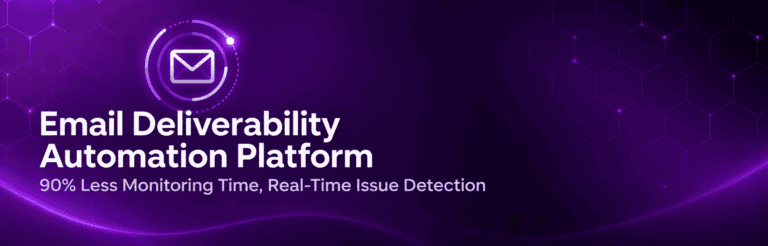
-90% Monitoring Time (15 hrs → 1.5 hrs)
View Case Study →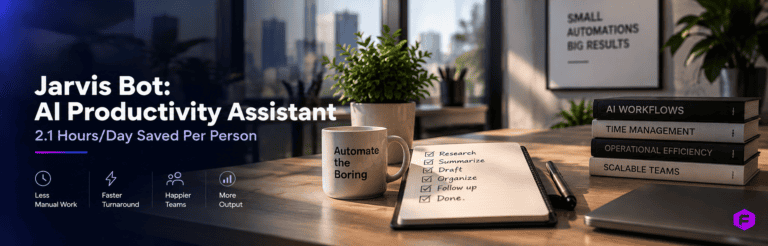
2.1 hrs Admin Time Saved Per Person/Day
View Case Study →
-70% Search Time Reduction
View Case Study →
10x Screening Capacity Increase
View Case Study →
RAG grounds a model's answers in real, retrieved data without changing the model itself — it changes what the model knows, not how it behaves. Fine-tuning retrains part of a model to change its behavior, vocabulary, or tone. Most businesses that think they need fine-tuning actually need RAG.
During the free Feasibility Scope — by understanding whether the real problem is knowledge (RAG solves this) or specialized behavior (fine-tuning solves this) or something a simpler prompt could already handle.
We only publish verifiable case studies, never invented statistics — ask on the call for the one most relevant to your situation.
Most focused RAG pipelines take 5-8 weeks from scoping to launch, depending on how many data sources are involved and how much cleanup the underlying data needs. Projects involving agentic or graph-based retrieval typically run longer given the additional architecture work.
Common situation. We assess the real state of your data during the free scope and tell you honestly what cleanup would be needed before a RAG pipeline could work well against it.
It depends on your actual scale, query patterns, and existing infrastructure — we recommend the right fit during scoping rather than defaulting to one platform regardless of your situation.
No credible agency should claim that. RAG significantly reduces hallucination by grounding answers in real data, but doesn't eliminate it completely — which is why evaluation and a defined fallback path for low-confidence answers are part of every pipeline we build.
Agentic RAG lets the system plan multi-step retrieval and decide when it needs more information, rather than answering from a single retrieval pass. It's genuinely valuable for complex, multi-part questions, but adds real complexity — we scope honestly whether your use case needs it or whether standard RAG already solves the problem.
It depends heavily on data volume, number of sources, and whether advanced architecture like agentic or graph retrieval is involved. We don't quote a number here deliberately — the free feasibility call exists specifically to understand your real data and requirements first, so any number we give you actually reflects your project, not a generic placeholder.
You do, fully — confirmed in writing before the project starts.
Yes — most RAG projects connect to existing document repositories, databases, or internal tools rather than existing as an isolated system.
Yes. Retrieval quality can drift as your data changes, so ongoing monitoring is typically part of the engagement structure.
We tell you directly, on the free scope call, before any money changes hands — including pointing you toward a simpler or different approach if that's what genuinely solves the problem.
Claim the free RAG Feasibility Scope, or book a strategy call directly if you already know what you're building.