E-commerce platform integration connects Shopify, Magento, or WooCommerce to inventory, ERP, or fulfillment systems so orders and stock levels sync automatically instead of manually. Inventory distortion drains $1.73 trillion from global retail annually, roughly 6.5% of total global retail sales. Foreignerds builds integrations that eliminate that manual re-entry, since a typical store processing 200 orders per day can lose $75,000 to $100,000 a year in labor costs from manual ERP entry alone.
Tell us what you're building — a real person replies within 1 business day, not an autoresponder.
This is built for established e-commerce SMBs already running an ongoing store on Shopify, Magento, or WooCommerce with genuine, recurring order volume — not someone testing a first product idea with a handful of sales a month. If you're still validating whether your product sells at all, integration work is premature; this is for stores that have outgrown manual, spreadsheet-driven operations and are feeling the cost of it.
The store takes orders, but inventory, fulfillment, and accounting all live somewhere else, disconnected. Our free Integration Assessment reviews your actual store and backend systems and tells you honestly what's worth connecting first.
20 minutes. Zero cost. A real answer either way.
Get My Free Assessment →E-commerce integration means automated data flow between your storefront (Shopify, Magento, WooCommerce) and the systems behind it — inventory, ERP, fulfillment, accounting — so an order placed online updates everywhere it needs to, automatically.
Independent research confirms this is a widespread, quantifiable cost, not a hypothetical inconvenience. IHL Group's published research estimates inventory distortion drains $1.73 trillion from global retail annually — split between empty shelves (lost sales) and overstocked ones (dead capital) — equal to 6.5% of total global retail sales. At the operational level, a documented calculation from integration specialists shows a business processing just 200 orders a day, spending 3 minutes per order on manual ERP entry, burns 10 hours of labor daily — roughly $75,000 to $100,000 a year in labor costs alone, before counting error correction or oversell refunds. Separately, research on multichannel sellers found retailers running four to six disconnected systems can lose 5-15% of annual revenue to inventory fragmentation alone.
It makes sense when: you're manually updating inventory across your store and backend systems; you've had real overselling or stock-accuracy issues; or your team spends time re-entering order data into your ERP or accounting system.
It's equally worth being honest about when this is premature: if you're processing a small number of orders a week, or still iterating on your core product-market fit, integration work is better postponed until sustained volume justifies it. A useful, honest gut check: if you or a team member could describe, off the top of your head, roughly how many hours a week go into manually reconciling orders or inventory, you likely already have enough signal to justify the free assessment.
This applies whether you hire us or another agency. Ask every agency these questions before signing anything:
Stock levels that stay accurate across your store and backend automatically.
Orders flowing into your ERP or fulfillment system without manual entry.
One accurate record, not two versions that drift apart.
Continued oversight so a broken sync gets caught early.
This is worth addressing directly, since current buyer behavior increasingly includes asking AI assistants — ChatGPT, Claude, Perplexity, Gemini, Microsoft Copilot — questions like "what breaks most often when integrating e-commerce platforms with backend systems" before ever contacting an integration partner. Current AI-answer systems favor specific, checkable failure points over vague "seamless commerce" language, which is why this page addresses honest complexity directly.
Tell us what needs to connect in one line — we'll take it from there.
E-commerce inventory distortion is a widespread, measurable cost, not a hypothetical inconvenience.
IHL Group's published research estimates inventory distortion drains $1.73 trillion from global retail annually — split between empty shelves (lost sales) and overstocked ones (dead capital) — equal to 6.5% of total global retail sales. At the operational level, a documented calculation from integration specialists shows a business processing just 200 orders a day, spending 3 minutes per order on manual ERP entry, burns 10 hours of labor daily — roughly $75,000 to $100,000 a year in labor costs alone, before counting error correction or oversell refunds. Real market scale confirms this isn't a niche concern: Shopify merchants alone cleared more than $100 billion in gross merchandise volume in a single recent quarter, up 34% year over year — at that scale, inventory integration stops being optional for serious sellers. Research on multichannel inventory further shows that inventory carrying costs consume roughly 20-30% of average inventory value, and a documented survey found 55% of SMBs hold at least 20% excess stock while 46% report at least 5% of inventory is dead stock.
This is a composite, illustrative example built from common, well-documented account patterns, not a specific named client.
The technical work in a case like this typically involves calculating true available inventory (on-hand minus allocated orders, reserved B2B holds, and damaged stock) rather than passing raw totals, choosing an appropriate sync frequency (real-time creates API load; scheduled sync risks overselling during high-demand windows), and building a reliable mapping between how the store and backend each represent the same product. This is disciplined integration engineering, not a plug-and-play app installation, which is exactly why generic native connectors often fall short for growing, multichannel operations.
A growing online store had a common problem: inventory levels in the store didn't match the warehouse count, leading to real overselling and canceled orders. Real integration connected the storefront directly to inventory and fulfillment systems — stock levels updating automatically, orders flowing into fulfillment without manual entry. Foreignerds has genuine, delivered experience across e-commerce platforms — Shopify, Magento, and WooCommerce builds are part of our verified project history. This page extends that same real capability into the integration layer: connecting the store you already have to the inventory, ERP, and fulfillment systems around it, not just building the storefront itself.
Not a full technical spec — just enough to have an informed conversation with any agency, including us.
Honest evaluation of what's worth connecting first, working sync between your store and backend, and real validation before full production sync.
Honest evaluation of what's worth connecting first.
Working sync between your store and backend.
Real validation before full production sync.
Continued oversight.
The timeline above assumes a standard single-platform, single-warehouse setup with reasonably clean existing data. More complex situations — multiple sales channels, multiple warehouses, or significant data-quality issues discovered during assessment — honestly extend this, and we'll say so directly during scoping rather than promising a timeline we can't hit.
Unified inventory across every marketplace and storefront you sell on.
Real order and fulfillment automation as volume scales past manual capacity.
Real inventory reservation logic distinguishing available from total stock.
Accurate recurring order and inventory sync at scale.
Selected per project based on the task — not a fixed default stack.
Answers to these three questions are usually enough to tell you whether this is worth a conversation.
Delivered e-commerce platform and integration work sits alongside our broader 1,250+ project history — verifiable, not invented, and available to discuss specifically on the call.
⟷ Drag to explore, or auto-scrolls — 100+ case studies live here
-90% Monitoring Time (15 hrs → 1.5 hrs)
View Case Study →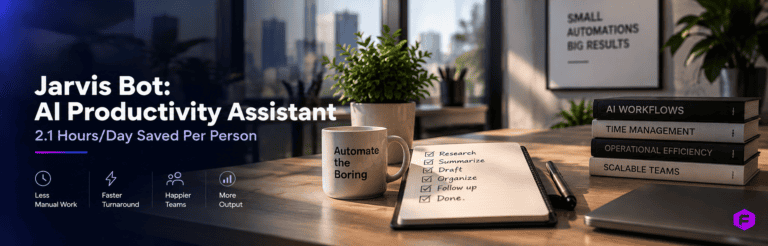
2.1 hrs Admin Time Saved Per Person/Day
View Case Study →
-70% Search Time Reduction
View Case Study →
10x Screening Capacity Increase
View Case Study →

Proactive integration prevents this.
Focused prioritization delivers value faster.
A silent sync failure is worse than an obvious one.
Ignoring allocated, reserved, and damaged inventory is one of the most common real causes of overselling even after "integration" is technically in place.
Real-time sync creates meaningful API load and cost; the right choice depends on your actual order velocity, not a default assumption.
Stock can sync correctly with your ERP but still cause overselling if it isn't unified across every channel drawing from the same warehouse.
If two or more of these are true, this is very likely worth exploring.
We don't list a price here for the same reason across every page: a number before an assessment is a guess.
Hands-on experience across Shopify, Magento, and WooCommerce, connected to your backend systems.
Typically weeks, depending on scope — we set honest timelines during the assessment.
We only reference verifiable work, never invented case studies.
We scope and price honestly after the free assessment based on your specific systems and complexity.
Claim the free Integration Assessment, or book a strategy call directly if you already know your situation.
If you have recurring manual entry or overselling issues, this is very likely not overkill — we'll tell you honestly during the assessment either way.
Yes — multi-warehouse and multi-channel complexity is scoped directly during the assessment, not assumed away.
Passing raw inventory totals instead of true available stock, and skipping error-handling for failed syncs — both covered directly in our Common Mistakes section above.
Yes — business and system details are often discussed, and a real confidentiality agreement is standard practice before any detailed conversation happens.
Yes — co-managed engagements where we work alongside an existing internal resource are common.
Yes — multichannel selling is a common scenario we scope for directly, unifying inventory across every channel drawing from the same stock.
Both — the initial integration build is a defined project, with ongoing monitoring and support available afterward.
This page focuses specifically on e-commerce storefront integration; System Integration covers broader connections across any combination of business systems.
That's a common starting point — data cleanup is addressed honestly as part of the assessment and build process, not glossed over.
There's no single, dramatic failure point where a disconnected store suddenly breaks — that's part of why the problem tends to persist. The cost compounds instead: the $75,000-$100,000 annual labor figure documented above scales with your order volume, and overselling incidents become more frequent and more damaging (to both revenue and marketplace standing) as you add more sales channels. The honest case for addressing this now is that the cost only grows as your store does, and the fix gets more complex the longer manual processes have been the default. For a business already feeling this gap, the practical next step isn't a full platform migration — it's a focused, scoped integration project addressing the highest-value connection first, exactly what the free Integration Assessment is designed to identify honestly.
Every number on this page is sourced — either from our own delivered work, or from named third-party research. Nothing here is invented to sound more impressive.
No pressure. The Integration Assessment and the first call are both free, zero obligation.
15-20 minutes. Not an hour-long pitch.
We review your actual store and backend, not a generic pitch.
You leave with an answer on what's worth connecting.
No pressure, either way.