Home security and smart home software with AI lead capture handle self-install customer acquisition for security companies competing against national DIY brands. 49% of alarm system users now self-install, and professional monitoring ranks just 9th among 12 purchase factors homeowners consider before buying. Foreignerds builds systems for that self-sufficient, DIY-leaning buyer, capturing leads before they default to a big-box self-install kit instead.
Tell us what's going on — a real person replies within 1 business day, not an autoresponder.
That approach misses a real, documented shift: today's home security shopper is pragmatic and self-sufficient, prioritizing ease of use (50%) and monthly cost (46%) over professional monitoring, which barely cracks the top 10 purchase factors.
We build home security marketing and lead-capture systems around that actual buyer behavior — because AI person and package detection has already reached 28% adoption, driven largely by Ring, Nest, and Eufy shipping these features as defaults, meaning today's competitive landscape is as much about DIY-friendly smart devices as traditional monitored alarm systems.
Get a Real Assessment of Your Project →This is built for home security and smart home company owners navigating a genuine, documented shift in buyer behavior — homeowners increasingly self-installing and skipping professional monitoring — who need positioning and lead-capture built for how this category actually buys now, not the monitored-contract model of a decade ago.
AI person and package detection has reached 28% adoption among home security users, largely driven by consumer devices (Ring, Nest, Eufy) shipping these features by default. Facial recognition shows lower current adoption (13%) but very high latent interest (39%), suggesting a short path to mainstream use.
The self-sufficiency shift is real, documented, and specific: 49% of alarm system users now self-install, and professional monitoring ranks 9th among 12 purchase factors — well behind ease of use (50%) and monthly cost (46%). Renters represent the fastest-growing segment, with a 12-point jump in camera adoption in one year and purchase intent exceeding homeowners' across most device categories. The broader smart home market context is substantial: global household penetration reached approximately 82% in 2026, and the AI-in-smart-home-technology market specifically is projected to grow from $31.9 billion in 2026 to $129.4 billion by 2033 — a 23% CAGR reflecting real, sustained investment in AI-driven home security and automation features.
It makes sense when: your marketing still leads with traditional monitored-contract positioning while your actual buyer increasingly wants DIY-friendly, self-install options with straightforward monthly costs; you compete for renters, the documented fastest-growing segment, without positioning specifically for cable-free, portable, no-contract solutions; or your current digital presence isn't showing up when homeowners research home security options through AI assistants.
It's equally worth being honest about when this is premature. If your business already sells primarily DIY-friendly, self-install products with straightforward positioning, the messaging shift is less urgent than for companies still leading with traditional monitored-contract sales. A useful gut check: if your current lead-qualification process doesn't distinguish DIY-preference customers from monitored-service customers, that segmentation gap should close first. What Happens If You Wait: There's no single dramatic failure point — most home security companies don't lose a specific customer to outdated positioning in a visible way. The gap compounds quietly instead: with professional monitoring now ranking 9th of 12 purchase factors, companies still leading sales conversations with monitored-contract value propositions are increasingly misaligned with what documented buyer research shows actually drives purchase decisions. The renter-segment opportunity is a live, current growth category: a 12-point jump in camera adoption among renters in a single year, with purchase intent exceeding homeowners' across most device categories, represents real, current demand — companies not positioning specifically for cable-free, portable, no-contract solutions are missing exactly the fastest-growing segment in this market.
Lead qualification that distinguishes DIY/self-install preference from monitored-service interest, reflecting how buyers actually approach this category now. Selected from Foreignerds' full service catalog based on genuine Home Security & Smart Home relevance — not a generic list reused across every industry page.
Quoting and scheduling automation built for genuinely different DIY-installation and professional-installation workflows. Content Marketing & Writing — positioning around ease-of-use and cost transparency, the documented top purchase factors, rather than outdated monitored-contract-first messaging.
Licensing-aware systems distinguishing monitored-service offerings requiring alarm licensure from DIY product sales. SEO & Local SEO — critical given how heavily local search and renter-specific positioning drive customer acquisition in this category.
Positioning for homeowners and renters researching home security options through AI assistants directly. AI Visibility Audit — a direct diagnostic of whether your company appears when someone asks AI assistants for home security recommendations.
For home security advertising budgets, segmented between DIY-product and monitored-service demand. Reputation Management — directly material given how heavily trust affects security-purchase decisions, a category defined by protecting one's home and family.
CRM and lead-management platform integrations, segmented for DIY versus monitored-service preference. AI/ML platforms for lead qualification reflecting documented buyer-priority research. Alarm-licensing and false-alarm-ordinance-aware compliance tooling for monitored-service offerings. Home-security-specific SEO, Local SEO, GEO, AEO, AI-Powered PPC, and AI Visibility Audit tooling.
The buyer-behavior pattern is the real, documented lever: 49% of alarm users now self-install and professional monitoring ranks 9th of 12 purchase factors — companies leading with ease-of-use and cost-transparency messaging, not monitored-contract value, are the ones aligned with what actually converts today's buyer.
Homeowners and renters researching home security options increasingly use AI assistants for initial research, following the same broader consumer research-behavior shift affecting home-services selection generally. This changes what needs to be true about a home security company's online presence. Traditional SEO optimizes to rank in local search results. GEO and AEO optimize for being the source an AI system cites or recommends when someone asks about home security options or compares DIY versus monitored service directly.
The real, current disruption in this category isn't primarily technological — it's behavioral.
The real, current disruption in this category isn't primarily technological — it's behavioral: buyers have shifted decisively toward self-sufficiency, with 49% self-installing and professional monitoring ranking below ease of use and cost among purchase factors, a genuine change from the monitored-contract-dominant model of a decade ago.
AI-driven features are simultaneously becoming baseline expectations rather than premium differentiators: 28% adoption of AI person/package detection, driven largely by defaults on mainstream consumer devices, means companies competing purely on "we have AI features" are competing on something increasingly standard, not differentiated — the real differentiation now sits in ease-of-use, transparent pricing, and honest DIY-versus-monitored positioning.
Tell us what's going on in one line — we'll take it from there.
Home security and alarm companies typically require state-specific alarm installer or low-voltage contractor licensing, with monitoring services in many states requiring separate licensure or registration. Companies offering professional monitoring must comply with state-specific false-alarm ordinances and, in some jurisdictions, alarm permit requirements. AI-driven lead-qualification and quoting systems should account for whether a customer wants self-install/DIY versus professionally monitored service, given the genuinely different licensing, liability, and service models each requires.
This is a composite, illustrative example built from common, well-documented patterns in home security company marketing, not a specific named client.
A regional security company had marketing and sales scripts built entirely around monitored-contract value propositions, missing the documented reality that most prospective buyers prioritized ease-of-use and cost transparency over monitoring specifically.
Rebuilding lead-qualification and content around actual buyer priorities — with clear, honest DIY-versus-monitored positioning — improved lead-to-sale conversion by better matching messaging to what buyers in this category are actually researching and comparing.
Real buyer-behavior and positioning auditing, lead capture and content rebuilt around actual buyer priorities, plus ongoing positioning refinement and marketing.
Honest evaluation of current marketing messaging against documented 2026 buyer-priority research, and lead-qualification gaps between DIY and monitored-service prospects.
Lead capture and content rebuilt around actual buyer priorities (ease of use, cost transparency), with genuine DIY-versus-monitored segmentation.
Continuous positioning refinement, plus local, renter-inclusive marketing — including GEO/AEO.
Ease-of-use and cost-transparency positioning matter most given documented buyer priorities.
A genuinely distinct value proposition given real, if smaller, demand for monitored service specifically.
A distinct sub-vertical given broader home-automation scope beyond security specifically.
A genuinely distinct sub-vertical given different buyer, compliance, and sales-cycle dynamics.
An emerging, distinct sub-segment given the documented fastest-growing demand category in this market.
When professional monitoring ranks 9th of 12 documented purchase factors.
From monitored-service prospects, offering both groups a generic, one-size-fits-all pitch.
Despite its documented, fastest-growing purchase-intent trajectory in this market.
When 28% baseline adoption via mainstream consumer devices makes this increasingly standard, not exceptional.
Despite these ranking as the top two documented purchase factors.
Researching security options, even as this pattern shifts broadly across home services.
Selected per project based on the task — not a fixed default stack.
Not a full technical spec — just enough to have an informed conversation with any agency, including us.
If two or more of these are true, this is very likely worth exploring.
These four questions are worth answering honestly before any AI investment — the audit will help you answer them with certainty.
We don't list a price here for the same reason across every page: a number before an assessment is a guess, and for home security companies specifically, scope depends heavily on your current DIY-versus-monitored service mix. Your actual scope will determine cost after the audit.
Claim Your Free Home Security & Smart Home AI Visibility Audit
Yes — real integration work is core to these projects. Scope depends on your specific platform.
The documented data shows this directly — monitoring ranks 9th among 12 purchase factors in SafeHome.org's 2026 survey of 2,435 US adults, well behind ease of use and monthly cost.
Buyer-behavior-first development, not standard SEO/PPC functionality that still assumes a monitored-contract-first sales model buyers have documentedly moved away from.
No — a real third of users show strong interest in AI-assisted professional monitoring specifically, the goal is honest segmentation, not abandoning the offering.
Depends on your current DIY-versus-monitored service mix — the audit in Week 1 gives an honest, specific timeline.
Yes — the sub-vertical breakdown above reflects genuinely different needs we scope separately.
Because the data shows this specifically — a 12-point jump in camera adoption among renters in one year, with purchase intent exceeding homeowners' across most device categories, a real, current growth opportunity.
We help build compliance-aware systems reflecting your state's specific alarm installer and monitoring licensure requirements.
Growing fast — the AI in Smart Home Technology market is projected to grow from $31.9 billion in 2026 to $129.4 billion by 2033, a 23% CAGR.
49%, per SafeHome.org's 2026 survey of 2,435 US adults — a real, documented majority shift away from professional installation.
GEO is optimizing your content so AI systems cite or recommend your company directly when someone asks about home security options.
AEO structures your content to be pulled as a direct answer by AI-driven search features during security-provider and DIY-versus-monitored research.
A direct diagnostic of whether and how your company currently appears when someone asks an AI assistant for home security recommendations.
Increasingly yes, following the same broader consumer research-behavior shift affecting home-services and purchase decisions generally.
Directly — trust matters significantly given this category protects a person's home and family, and AI systems weigh review sentiment heavily when forming recommendations.
Yes — this shift is broad-based, and smaller companies invisible to AI discovery risk losing exactly the increasingly AI-informed buyers now researching this way.
Through recurring AI Visibility Audits tracking citation and recommendation frequency, alongside traditional lead-generation metrics.
Yes, under one roof — lead qualification, positioning, SEO, GEO/AEO, and AI Visibility auditing together.
Not anymore — buyer research behavior is shifting broadly, following the same pattern seen across other home-services categories.
Book a call — the audit gives you an honest picture of your current buyer-segmentation, positioning alignment, and AI search visibility.
Real projects. Real, sourced results.
Delivered home security, smart home, and broader AI work sits alongside our 1,250+ project history — verifiable, not invented, and available to discuss specifically on the call.
15-20 minutes, focused on your actual situation, not a generic pitch.
15-20 minutes, focused on your actual situation, not a generic pitch.
We tell you honestly if foundational work needs to happen before AI adds real value.
You leave with a specific, scoped next step — not a vague proposal.
100+ case studies live here

-90% Monitoring Time (15 hrs → 1.5 hrs)
View Case Study →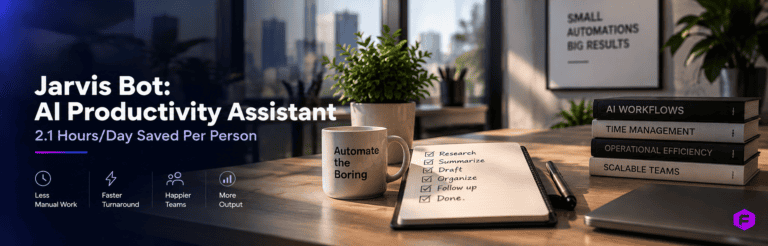
2.1 hrs Admin Time Saved Per Person/Day
View Case Study →
-70% Search Time Reduction
View Case Study →
10x Screening Capacity Increase
View Case Study →