Enterprise software development builds large-scale systems for organizations replacing or modernizing legacy platforms and infrastructure across multiple departments. SAP has set a firm deadline of December 31, 2027 for ECC mainstream maintenance to end, yet 76% of companies still have no defined migration roadmap in place. Foreignerds builds migration paths for organizations facing that exact deadline, scoped around real dependencies, not a generic replatforming template.
Tell us what you're working with — a real person replies within 1 business day, not an autoresponder.
They fail because the legacy system underneath it was never built to feed it clean, real-time data in the first place. Our free Enterprise Modernization Scope reviews your actual systems and tells you honestly what's genuinely blocking you, and what a real path forward looks like — before you commit budget to another AI pilot that stalls at the same integration wall.
20 minutes. Zero cost. A real answer either way.
Get My Free Scope →Enterprise software has a genuinely traceable lineage that predates the personal computer entirely. It began in the early 1960s, not as software at all in the modern sense, but as Material Requirements Planning — a joint effort between J.I. Case, a manufacturer of tractors and construction machinery, and IBM, built to calculate what materials a factory actually needed and when. Early MRP systems ran on mainframes, required dedicated technical teams, and were affordable only to the largest manufacturers. The category as we'd recognize it today began in 1972, when five former IBM engineers in Mannheim, Germany founded a company called SAP — Systeme, Anwendungen, Produkte in der Datenverarbeitung — with the explicit goal of building standard business software that worked in real time, something that hadn't been done before. Oracle followed in 1977, founded by Larry Ellison, Bob Miner, and Ed Oates, initially focused on relational database technology before expanding into enterprise applications. Both companies are still the dominant names in enterprise software fifty-plus years later, which is a genuinely unusual level of category longevity for software. The term "Enterprise Resource Planning" itself wasn't coined until 1990, by research firm Gartner, to describe systems that had grown beyond manufacturing to integrate finance, HR, and operations into one platform. SAP's R/3 release in 1992 marked the shift from centralized mainframe architecture to client-server computing, finally making integrated enterprise systems accessible to mid-sized businesses, not just the largest manufacturers who could afford a dedicated mainframe team. The approach of "keeping the lights on" while the industry around it fundamentally changes has been a recurring theme of this category for fifty years — and it's the exact tension defining the category again right now, in a new, dated, unavoidable form.
This isn't a generic "modernize eventually" conversation — there's a real, fixed date attached to it for a large share of enterprises. SAP has confirmed mainstream maintenance for ECC, the ERP platform still running in production across a substantial portion of global manufacturing, distribution, and enterprise operations, ends December 31, 2027. That's not an analyst projection that might shift — it's a scheduled vendor deadline, the same category of forcing function Y2K created a generation ago, except this time the pressure is compounding with something Y2K never had to contend with: enterprise AI initiatives that literally cannot function without the modernization work happening anyway.
Two numbers make the gap between deadline pressure and actual readiness stark. Research firm Horváth's 2025 study found 76% of companies still have no defined migration roadmap for the transition, and separate industry data suggests roughly 46% of SAP ECC customers may still be running the legacy system past the 2027 cutoff itself. SAP does offer Extended Maintenance through 2030 for businesses that need more runway — but it comes at meaningful additional cost on top of standard maintenance fees, with no new features and no guaranteed security patching at the same level, meaning the system becomes a genuine, growing risk the longer an organization runs on it, not a safe holding pattern.
The migration itself is a real, substantial undertaking, not a quick upgrade — realistic timelines run 9-15 months for a brownfield migration (converting the existing system in place) and 12-24 months for a greenfield implementation (a clean rebuild on the new platform), stretching to 18-36 months for the largest, most complex enterprises. Horváth's research also found that 49% of companies cite process modification, not the technical migration itself, as the biggest hurdle — meaning the real work is often organizational and operational, not purely a software upgrade.
The data on how blocked enterprise AI actually is right now, separate from the SAP-specific deadline, is more severe than most boardroom conversations reflect. Over 75% of ERP-related AI projects stall specifically at integration boundaries — not because the AI model is inadequate, but because it can't actually reach the data it needs inside a legacy system that was never built to expose it. Poor data categorization stemming from legacy architecture increases AI implementation costs by as much as 40%, and two-thirds of enterprises remain stuck in the AI pilot stage specifically because of legacy integration barriers. Deloitte's own research identifies legacy integration as a primary obstacle to agentic AI adoption specifically — meaning the current wave of AI agent enthusiasm runs directly into the same wall this category has been quietly accumulating for two decades.
The financial cost of inaction is measured, not estimated loosely: Pegasystems and Savanta's research puts average annual technical debt waste at more than $370 million per enterprise, and separate industry data consistently finds 70-80% of enterprise IT budgets consumed by simply maintaining existing systems rather than building anything new — a starvation cycle where the money that should fund AI and modernization initiatives is instead spent keeping decades-old infrastructure barely running.
Not every legacy system needs a full rebuild, and treating every modernization conversation as "rip and replace" is itself a common, expensive mistake. If your core system genuinely still fits your operations and the real problem is specific integration gaps, a lighter modernization approach may solve the actual problem for a fraction of the cost.
Full replacement or deep modernization makes sense when: your system is approaching a genuine vendor end-of-support deadline like SAP ECC's December 2027 cutoff; you're building workarounds around your core system so extensively that the workarounds have become a parallel, ungoverned operating layer; your AI initiatives are consistently stalling at integration boundaries; or the specialized technical talent needed to maintain your current system (COBOL, older ERP customizations) is becoming genuinely difficult to find and retain, a shortage that's accelerating specifically around ECC as consultants shift focus to S/4HANA work.
This applies whether you hire us or another agency. Ask every agency these questions before signing anything:
Real technical work matched to your actual situation — encapsulation (building a modern API layer around an existing system without touching the underlying code), platform modernization (adding cloud integration and AI-ready services around a preserved core), or full replacement, chosen based on genuine assessment, not a default sold regardless of fit.
Real guidance through the specific decision that most SAP-running enterprises now face before December 2027 — brownfield conversion versus greenfield rebuild, migration sequencing, and integration continuity across the dozens of interfaces most ECC environments have accumulated over years of customization.
Systems designed for the scale, security, and integration complexity that distinguishes true enterprise software from standard business applications — including the specific architecture decisions that determine whether AI initiatives built on top of your systems actually work or stall at the same integration walls blocking most enterprises today.
Building the modern integration layer that lets AI services, third-party tools, and internal systems actually exchange clean, governed data — the specific technical gap behind the 75%+ ERP-AI integration failure rate industry research consistently finds.
Moving decades of accumulated business logic and historical data without losing context or disrupting operations — the single highest-risk part of any enterprise modernization, and the most commonly cited reason migrations fail or run over budget.
Built for the real security exposure that comes with legacy systems and the compliance requirements (SOC 2, industry-specific regulatory frameworks like GxP for pharma or DORA for financial services) that genuine enterprise-scale software has to satisfy, not an afterthought.
This is the specific, itemized scope — not a vague "enterprise modernization services" claim. Every engagement includes:
The pressure driving enterprise modernization spending right now is genuinely structural, not cyclical. Industry research consistently finds a substantial majority of CIOs now identify legacy systems as the top roadblock to business growth, and 45% of modernization budgets in 2026 are now allocated specifically to AI-driven modernization solutions, up from 28% in 2024 — a real, measurable reallocation of enterprise IT spend toward exactly this problem in the span of two years.
The SAP-specific migration wave is itself a major driver of current market activity. Real benchmark data drawn from more than 80 enterprise S/4HANA migrations completed between 2023 and 2025 shows total implementation costs spanning consulting, licensing, infrastructure, integration, and training — with the specific number varying enormously by organization size and complexity, which is exactly why vendor benchmarking and honest scoping matters more than a single published average. What's consistent across the research: organizations starting their migration in 2025 or 2026 are working with more experienced consulting resources and more competitive pricing than businesses waiting until the deadline is imminent, since the pool of specialists who genuinely understand ECC-to-S/4HANA migration is being drawn down by demand as 2027 approaches.
The pattern research is finding across enterprises attempting AI adoption on top of legacy systems has a name in the industry now: the "isolated AI trap" — deploying edge AI tools like chatbots, copilots, and document classifiers that work fine in a controlled demo, then fracture when exposed to real production-scale data flows and the legacy constraints underneath them. This is exactly why legacy modernization and AI readiness have become the same conversation in 2026, not two separate initiatives — an enterprise's realistic AI roadmap is now widely understood to be contingent on its underlying systems modernization, not the other way around.
Approach matters as much as urgency. Industry practice in 2026 has converged on a few genuinely distinct modernization strategies rather than one default: the "two-tier approach" (deploying modern cloud systems for specific business units while maintaining legacy elsewhere, migrating incrementally), "platform modernization" (adding a cloud integration layer and AI-ready services around a preserved legacy core, the fastest and lowest-risk path though it doesn't address underlying technical debt), and "composable" replacement (swapping a monolithic system for best-of-breed applications connected through APIs and a unified data layer). The right choice depends on your actual situation, not a one-size-fits-all sales pitch.
Tell us what you're working with in one line — we'll take it from there.
This is a composite, illustrative example, not a specific client.
Say a mid-sized manufacturer is running SAP ECC, approaching the December 2027 end-of-maintenance deadline, with three AI pilot projects stalled because none of them can reliably access clean production data from the core system. Weeks 1-2 assess the real situation: which parts of the ERP genuinely still fit operations, whether a brownfield conversion or a lighter platform-modernization approach around the preserved core is the right call, and what the real migration timeline looks like given the organization's actual complexity — in this case, platform modernization paired with a scoped brownfield conversion, since the core financial and manufacturing logic is sound but the integration layer is the real blocker. Weeks 3-16 build a modern API and data layer around the existing system while executing the S/4HANA conversion in parallel, exposing clean, governed data the stalled AI pilots can finally actually use, without destabilizing the underlying business logic the company depends on daily. The AI initiatives that had been stuck for over a year move forward on the modernized system, now genuinely AI-ready, ahead of the 2027 cutoff rather than scrambling against it.
A genuine assessment of your current systems and what modernization actually requires, a build matched to your real integration constraints, and a staged rollout — not a rip-and-replace that risks what already works.
Real assessment of what's actually blocking you — technical debt, integration gaps, or a genuine end-of-support deadline like SAP ECC's — before recommending any specific approach.
Development matched to the real chosen approach (encapsulation, platform modernization, brownfield conversion, or full replacement), with business continuity planned throughout, not treated as an afterthought.
Real testing against real production scenarios, staged rollout that keeps the business running throughout the transition, with parallel-run periods for higher-risk migrations.
Ongoing — Support & Continued Modernization. Enterprise systems require continuous governance as the business, compliance requirements, and AI landscape keep evolving — available when needed, not assumed.
Legacy ERP modernization connecting shop-floor and supply chain data to modern AI-powered analytics and dashboards, without destabilizing core production systems that can't tolerate downtime — a sector where SAP ECC dependency and the 2027 deadline are especially concentrated.
Enterprise systems built around real regulatory reporting requirements — including frameworks like DORA in Europe — where legacy integration gaps create genuine compliance risk, not just operational inconvenience.
Enterprise-scale systems handling real patient, manufacturing, and regulatory data at the compliance level (GxP validation, serialization tracking) true healthcare and pharmaceutical enterprise software requires — a sector where migration costs run especially high due to validation requirements, and where rushing a deadline-driven migration carries outsized risk.
Legacy commerce and inventory systems modernized for real-time inventory visibility, AI-powered personalization, and omnichannel fulfillment that older, batch-oriented systems structurally can't support.
Core operational systems modernized to support the real-time reporting and integration modern client expectations now require.
Full replacement is sometimes right, but platform modernization or encapsulation often solves the real problem at a fraction of the cost and risk — the right approach depends on genuine assessment, not a default sold regardless of fit.
With 76% of companies still lacking a defined roadmap, and realistic migration timelines running 9-36 months depending on complexity, waiting removes your ability to migrate on your own terms rather than under duress and inflated last-minute consulting rates.
This is precisely the "isolated AI trap" — pilot AI tools that work in a demo, then fail at real production data flows because the legacy system underneath was never built to expose clean data.
Real research found 49% of companies cite process modification, not the software conversion itself, as the biggest migration hurdle — treating this as a pure IT project rather than an operational one is a common, expensive miscalculation.
Moving decades of business logic isn't a simple lift-and-shift — losing historical context or business logic during migration creates real, expensive operational problems.
Enterprise systems can't simply go offline during modernization — a plan that doesn't address this in detail, including parallel-run periods for higher-risk migrations, is not a real plan.
Specialized skills for older systems (COBOL, legacy ERP customizations, ECC-specific expertise) are becoming genuinely scarce and increasingly expensive as the market shifts toward S/4HANA specialization ahead of 2027.
Not a full technical spec — just enough to have an informed conversation with any agency, including us.
If two or more of these are true, modernization is very likely worth scoping now — the free assessment will confirm the real approach and timeline.
None of these are permanent — they're simply signs to confirm the real urgency and scope with a free assessment before committing budget.
Most enterprise modernization agencies come from a systems-integration background first, with AI added as a newer service line on top. That ordering matters more than it sounds. Because AI development — the agents, chatbots, and automation systems covered elsewhere on this site — is our core practice, not a recent addition, we approach a modernization project already understanding exactly what clean, governed, AI-accessible data actually requires structurally, rather than treating AI-readiness as a marketing checkbox added to a standard modernization scope after the fact.
That difference shows up concretely in how we scope the integration layer specifically — the exact part of enterprise modernization where 75%+ of ERP-AI projects are currently stalling industry-wide. We're not guessing at what an AI system will eventually need access to; we're building the same kind of integration surfaces we build for our own AI development clients, applied to your legacy environment.
The firms we researched building this page (EPAM, Globant, Thoughtworks, Endava, and others) are genuine, large-scale enterprise modernization specialists — this is their entire business, and many are excellent at it. Here's the honest, practical difference at our scale: enterprise modernization increasingly means building real AI integration into legacy systems, not just migrating old code to new infrastructure — and that specific combination (deep legacy systems experience plus a genuine, dedicated AI development practice, not a recently-added service line) is genuinely less common than either capability alone. You're not required to use every service we offer, but when your modernization roadmap includes AI capabilities your current systems weren't built for, having that expertise on the same team doing the integration work is a real, practical advantage.
Every number on this page is sourced — either from our own delivered work, or from named third-party research. Nothing here is invented to sound more impressive.
No pressure. The assessment and the first call are both free, with zero obligation.
15-20 minutes. Not an hour-long pitch.
Not an hour-long pitch.
We review your actual systems and what's genuinely blocking you, not a generic pitch.
You leave with a real answer on the right approach and realistic timeline.
We don't list a price here for the same reason across every page: a number before real assessment is a guess. A focused integration-layer modernization and a full multi-year ERP replacement or S/4HANA migration are fundamentally different projects, with real published benchmarks (drawn from 80+ completed enterprise migrations) varying enormously by organization size, industry, and migration approach — pretending one number fits every situation serves no one.
The same standard used across every engagement.
Answer a few quick questions and we'll walk into the call already understanding what you need — not starting from scratch.
From AI voice outreach platforms to custom software and full-funnel marketing programs — every case study comes with numbers you can verify.
⟷ Drag to explore, or auto-scrolls — 100+ case studies live here
-90% Monitoring Time (15 hrs → 1.5 hrs)
View Case Study →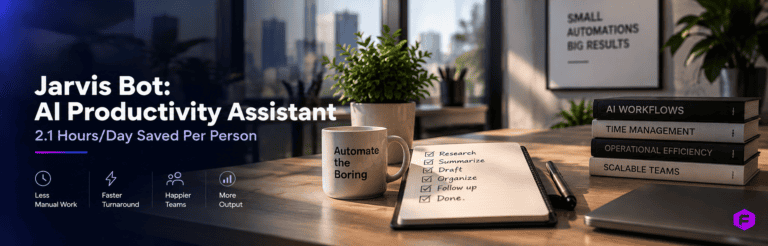
2.1 hrs Admin Time Saved Per Person/Day
View Case Study →
-70% Search Time Reduction
View Case Study →
10x Screening Capacity Increase
View Case Study →
Yes, directly. SAP has confirmed mainstream maintenance ends December 31, 2027. If you miss it, SAP offers Extended Maintenance through 2030, but at meaningful additional cost, with no new features and reduced security patching — meaning the system becomes a growing operational and security risk rather than a safe way to buy time. We assess your specific situation and realistic timeline during the free scope.
It depends on how much your current ECC customization genuinely still fits your business. Brownfield (converting the existing system in place) is typically faster — roughly 9-15 months for mid-size organizations — and preserves more of your existing configuration. Greenfield (a clean rebuild) takes longer — roughly 12-24 months — but allows a genuine architectural reset if your current system has accumulated years of workarounds you'd rather not carry forward. We assess this honestly based on your real situation, not a default recommendation.
This is one of the most common patterns in enterprise AI right now — industry research finds over 75% of ERP-related AI projects stall specifically at integration boundaries, not because the AI model is inadequate, but because it can't actually reach clean, governed data inside a legacy system that was never built to expose it. The fix is usually the integration layer, not the AI itself.
Often a lighter option genuinely exists. Platform modernization — adding a modern integration and AI-ready layer around a preserved core — is frequently the faster, lower-risk path if your core system logic still fits your business and the real problem is the integration layer. We assess this honestly rather than defaulting to full replacement.
It varies enormously by organization size, industry, and migration approach — real benchmark data from 80+ completed enterprise migrations shows a genuinely wide range, and published averages from any single source should be treated as a starting reference point, not a quote. We scope your actual cost after understanding your real system complexity, not before.
Genuinely the highest-risk part of any enterprise modernization project. Moving decades of business logic and historical data isn't a simple lift-and-shift, and losing context during migration creates real operational problems. We plan this with real precision, not a rushed timeline.
We only publish verifiable case studies, never invented statistics — ask on the call for the one most relevant to your industry and situation.
It depends heavily on scope and approach — a focused integration-layer modernization might take 3-4 months, a brownfield SAP conversion 9-15 months, and a full greenfield migration or ERP replacement can run 18-36 months for the largest, most complex enterprises. We give a real timeline after the free assessment.
It's the pattern where a business deploys edge AI tools (chatbots, copilots, document tools) that work in a demo, then fail at real production data flows because the underlying legacy systems were never modernized to support them. If your AI pilots work in testing but stall in production, this is very likely what's happening — we diagnose this specifically during the free scope.
Most enterprise modernization projects work alongside existing internal teams rather than replacing them — we scope the actual collaboration model based on your team's real capacity and the project's specific needs.
For many organizations, yes — real research found 49% of companies cite process modification as their biggest migration hurdle, ahead of pure technical challenges. We scope for the organizational and workflow impact, not just the software conversion.
You do, fully — confirmed in writing before the project starts.
We tell you directly, on the free scope call, before any money changes hands — not every system needs immediate action, and we'd rather tell you that honestly than sell modernization work you don't yet need.
Yes. Enterprise systems require continuous governance as business needs, compliance requirements, and the AI landscape keep evolving — typically part of the engagement structure going forward.
Yes — the specific December 2027 deadline is SAP-specific, but the underlying pattern (legacy integration blocking AI initiatives, accumulated technical debt, the real cost of waiting) applies across ERP platforms. We assess your actual system, whatever it is, during the free scope rather than assuming SAP by default.
Significantly. Regulated industries carry real additional validation requirements that extend realistic timelines beyond the general brownfield/greenfield ranges, and rushing a validated system to hit a deadline carries genuine regulatory risk. Industry data on pharmaceutical S/4HANA migrations reflects this — total cost of ownership and timelines both run higher than non-regulated industries, and that's a real, honest input into scoping, not a reason to panic.
Real. As the market shifts focus toward S/4HANA-specific expertise ahead of the 2027 deadline, ECC specialists and even S/4HANA implementation consultants are seeing rising demand and cost, particularly for organizations starting late. This is a genuine reason early planning is materially cheaper than waiting, not just a sales talking point.
Claim the free Enterprise Modernization Scope, or book a strategy call directly if you already know what you're dealing with.