Accessibility and compliance audits fix real, underlying code-level barriers instead of relying on a JavaScript overlay that claims instant compliance without changing anything structural. Automated scanning tools alone catch only 30-40% of real WCAG issues, and accessibility experts widely criticize overlay tools for masking problems rather than fixing them. Foreignerds fixes the actual code behind an audit, backed by 1,250+ delivered projects and a 5.0-star Clutch rating.
Tell us what you're building — a real person replies within 1 business day, not an autoresponder.
It usually isn't. Overlay widgets sit on top of broken code without fixing it, and real screen-reader users consistently report they make sites harder to use. Our free Accessibility Audit reviews your actual site against real WCAG standards and tells you honestly where the structural problems are.
20 minutes. Zero cost. A real answer either way.
Get My Free Audit →The accessibility overlay industry (AccessiBe, UserWay) sells an appealing promise: install one script tag, get instant compliance. The documented problem is that these tools don't fix underlying code, and disability advocacy organizations have consistently reported this creates new, real barriers rather than removing existing ones. Accessibility compliance requires structural fixes: proper semantic HTML, real alt text, keyboard-navigable elements, and sufficient color contrast built into the actual design.
Smaller, dedicated accessibility auditing firms comparable in scale to Foreignerds, like Equal Entry and Push-Based, build their business specifically around this code-level approach rather than the overlay shortcut, and we position ourselves the same way, backed by a checkable track record of 1,250+ delivered projects.
A fair, curious question before you read further: accessibility auditing has dedicated specialists like Equal Entry and Push-Based already doing exactly this work. Why look at Foreignerds? Because we build the actual sites and applications we're auditing for a living — real front-end code, real design systems — so a code-level accessibility fix isn't a separate discipline bolted onto our business, it's the same real engineering work we do every day. That's reflected in a genuine, checkable track record: 1,250+ delivered projects, 5.0 stars across 51 independently verified Clutch reviews, verifiable before you commit to anything.
If your site was built recently with accessibility considered from the start, a lighter check-in may suffice. A full audit earns its cost when you've never had a code-level review, or you're currently relying on an overlay widget as your only measure.
It makes sense when: you've never had a real WCAG audit; you're using an overlay widget and want to know your actual, underlying compliance status; you serve government, education, or healthcare clients with real compliance requirements; or you've received an accessibility complaint or demand letter.
This applies whether you hire us or another agency. Ask every agency these questions before signing anything:
If you're relying on an overlay widget, we assess what it's actually missing.
Overlay widgets catch a limited subset of issues — we test with actual assistive technology to find what's being missed underneath.
If you need real WCAG conformance, we fix the actual code.
Semantic HTML structure, genuine alt text, keyboard navigation, and real color contrast, built into your site's actual code, not patched by a script.
If your site serves regulated industries, we address your specific compliance requirements.
Government, education, and healthcare carry genuine, specific accessibility obligations.
If you've received a complaint or demand letter, we help you respond with substantive fixes.
A real compliance issue needs a real fix, not a quick overlay installation.
If you want proof we do this the right way, we show you verifiable work.
1,250+ delivered projects and a 5.0★ Clutch rating from 51 independently verified reviews, checkable before you commit.
Tell us what's going on in one line — we'll take it from there.
This is worth addressing directly, since current buyer behavior increasingly includes asking AI assistants — ChatGPT, Claude, Perplexity, Gemini, Microsoft Copilot — questions like "does my website need to comply with the EU Accessibility Act" before ever contacting an auditor. Current AI-answer systems favor specific, sourced legal and technical criteria over vague "we ensure compliance" language, which is why this page leads with checkable regulatory detail.
Growing scrutiny of overlay-only approaches.
The current legal and advocacy landscape shows growing scrutiny of overlay-only approaches. ADA website audits from dedicated accessibility firms typically range from $1,250 to $2,750 depending on site complexity, reflecting the substantive work involved.
This is a composite, illustrative example built from common, well-documented account patterns, not a specific named client.
Say a business installed an overlay widget two years ago and considers accessibility handled. A real audit, testing with an actual screen reader, finds the checkout flow is unusable for a screen-reader user, despite the widget being active, because the underlying form fields were never given real semantic labels.
The fix rebuilds the actual form markup with genuine semantic structure, tests again with real assistive technology, and documents ongoing monitoring.
Genuine testing with real assistive technology, real findings ranked by actual severity, and code-level remediation built into your actual site — not an overlay, and not a one-time scan.
Genuine testing, not just automated scans.
Real issues ranked by genuine severity.
Real fixes built into your actual site.
Continued checks.
Genuine, specific Section 508 compliance requirements.
Real accessibility obligations for institutions receiving federal funding.
Genuine, elevated stakes given patient-facing digital services.
Growing legal exposure from ADA-related lawsuits.
Documented cases show this doesn't resolve underlying risk.
Automated scanners miss real usability issues.
Real compliance requires ongoing attention.
Real lawsuits target businesses of many sizes.
Proactive fixes are less costly than reactive response.
Selected per project based on the task — not a fixed default stack.
Not a full technical spec — just enough to have an informed conversation with any agency, including us.
Delivered accessibility and compliance work sits alongside our broader 1,250+ project history — verifiable, not invented, and available to discuss specifically on the call. Independently verify our track record on Clutch: 5.0★, 51 reviews.
⟷ Drag to explore, or auto-scrolls — 100+ case studies live here
-90% Monitoring Time (15 hrs → 1.5 hrs)
View Case Study →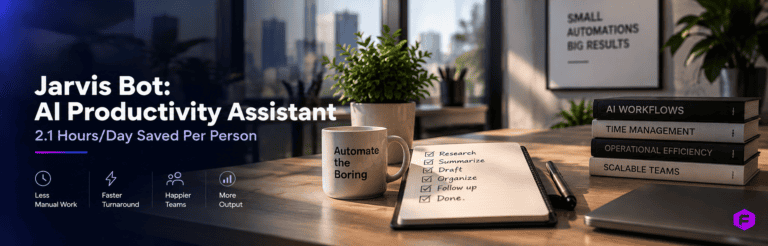
2.1 hrs Admin Time Saved Per Person/Day
View Case Study →
-70% Search Time Reduction
View Case Study →
10x Screening Capacity Increase
View Case Study →
If two or more of these are true, a dedicated audit is very likely worth it.
None of these are permanent.
We don't list a price here for the same reason across every page: a number before a real audit is a guess. The process: a free Accessibility Audit, real findings, a scoped proposal, then kickoff.
Not reliably, documented cases show businesses using overlay widgets still facing lawsuits.
Automated scanners catch a limited subset of issues, real audits test with actual assistive technology.
No, we fix the actual underlying code, and we can show you 1,250+ real delivered projects as proof of that approach.
It depends on your site's complexity. We scope and price honestly after the free audit rather than quoting a number upfront.
It depends on your industry and jurisdiction — we'll tell you honestly which conformance level actually applies to your situation during the assessment.
We only reference verifiable results, never invented case studies — ask on the call for the example most relevant to your industry.
Testing with assistive technology typically takes about a week, followed by a prioritized findings report in week two, then code-level remediation from week three onward.
You do, fully — confirmed in writing before the project starts.
Yes — accessibility auditing is a natural capacity extension for agencies needing real, technical depth, delivered under your own brand.
Not necessarily wasted, but it shouldn't be your only measure — we assess what it's actually missing underneath and build real fixes from there.
Yes — accessibility requirements vary by jurisdiction, and we scope accordingly for businesses operating internationally.
Both options exist — the initial audit and remediation is a defined engagement, with ongoing monitoring available as your site changes.
Yes — site and technical details are often discussed, and a real confidentiality agreement is standard practice before any detailed conversation happens.
Claim the free Accessibility Audit, or book a strategy call directly if you already know your situation.
Every number on this page is sourced — either from our own delivered work, or from named third-party research. Nothing here is invented to sound more impressive.
No pressure. The Accessibility Audit and the first call are both free, zero obligation.
15-20 minutes. Not an hour-long pitch.
We review your actual site and real compliance status, not a generic pitch.
You leave with an answer on where you stand.
No pressure, either way.