Web application development builds custom portals, dashboards, and SaaS platforms engineered around real load-time performance from the first line of code, not added afterward. Pages meeting Core Web Vitals standards see a 24% lower abandonment rate, and sites loading under 2 seconds convert 2.4x higher than slower competitors. Foreignerds builds applications around that measurable speed requirement, tested under real traffic before launch, not just in a staging environment.
Tell us what you're building — a real person replies within 1 business day, not an autoresponder.
This is built for established businesses needing a genuine, custom web application — an internal tool, a customer portal, a SaaS product — not a marketing website (see our Web Design Services page for that) and not a mobile app-store product (see our Mobile App Development page). This is for browser-based software solving a specific business workflow.
The single most measurable driver of real business outcomes — speed — gets fixed later instead of built in from the start. Our free Feasibility Assessment reviews your actual requirements and tells you honestly what a performant build actually requires — before performance becomes an expensive problem to fix after launch.
20 minutes. Zero cost. A real answer either way.
Get My Free Assessment →Every additional second of load time costs approximately 7% in conversion rate, and a 2-second delay pushes shopping cart abandonment rates to 87%. Sites loading in under 2 seconds achieve 2.4x higher conversion rates than sites loading in 5+ seconds. For B2B web applications specifically, a site loading in 1 second converts at 3 times the rate of a 5-second site, and 5 times the rate of a 10-second site. Mobile devices now generate more than 62% of all web traffic, yet mobile load times remain 3.4x slower than desktop on average.
It makes sense when: you have a specific business workflow (customer portal, internal dashboard, SaaS product) that off-the-shelf software doesn't solve; you need custom functionality tied to your actual business logic; or you're building a product meant to be accessed via browser rather than downloaded as an app.
It's equally worth being honest about when this is premature: if an existing SaaS tool or simple website solves your actual need, custom development is an unnecessary cost. A useful gut check — if you can name the specific workflow no existing tool handles well, you likely have enough signal to justify the feasibility assessment.
This applies whether you hire us or another agency. Ask every agency these questions before signing anything:
Portals, dashboards, and internal tools built around your actual business logic.
Multi-tenant, scalable web applications built for growing user bases.
The server-side systems your application actually depends on.
Built and measured against real speed benchmarks from the start, not fixed after launch.
This is worth addressing directly, since current buyer behavior increasingly includes asking AI assistants — ChatGPT, Claude, Perplexity, Gemini, Microsoft Copilot — questions like "should I build a custom web app or use an existing tool" before ever contacting a development agency. Current search and AI-answer systems favor content that gives specific, honest, checkable answers over vague marketing claims, which is precisely why this page states plainly when custom development isn't the right choice, not just when it is.
Performance has become a genuine, elevated priority in 2026, not just a best practice.
Google's March 2026 core update increased the weight of Core Web Vitals in ranking algorithms, and user expectations, shaped by native app performance, have compressed acceptable load times to under 3 seconds. Technical debt and infrastructure inefficiencies create genuine, hidden costs that compound over a product's lifetime — a reason why performance benchmarking during the initial build matters more than treating it as a later optimization project.
Tell us what you're building in one line — we'll take it from there.
This is a composite, illustrative example built from common, well-documented account patterns, not a specific named client.
A growing services business needed a custom client portal — existing tools didn't handle their specific billing and project-tracking workflow. Real development work started with a focused feasibility review confirming the actual technical requirements, built the application with real performance benchmarks defined upfront (not an afterthought), and validated real load times against actual user conditions before launch, not just in a controlled testing environment.
The technical work in a case like this typically involves defining the actual core workflow before any code is written, architecting for measured performance from the start, and building monitoring into the launch itself so performance issues surface immediately rather than through user complaints.
An honest evaluation of whether custom development is right for you, real development matched to your actual scope, real performance validation under real conditions, and ongoing attention after launch — not a build that stops at deployment.
Honest evaluation of your actual requirements and whether custom development is the right investment.
Working application build matched to your actual scope, with performance benchmarks defined upfront.
Real performance validation against actual user conditions, not just controlled testing.
Continued attention to performance as your user base and usage patterns evolve.
The timeline above assumes a standard scope. More complex applications — multiple integrations, significant scale requirements, or specific compliance needs — honestly extend this, and we'll say so directly during the assessment.
Client portals for project tracking, billing, and document sharing.
Scalable platforms built for growing user bases.
Real patient or client engagement portals built to genuine reliability standards.
Custom dashboards and tools improving internal team workflows.
The cost of slow performance compounds directly into lost conversions and abandonment — a 7% conversion loss per additional second is not a marginal detail.
A honest feasibility assessment prevents this expensive mistake.
With mobile now generating over 62% of web traffic, and mobile load times running 3.4x slower than desktop, real mobile-specific performance testing matters directly.
Performance under user conditions (variable networks, concurrent users) differs meaningfully from a quiet development environment.
Discovering painful limitations only after significant investment. Honest evaluation upfront prevents this common mistake.
Ongoing SaaS fees compound over years in ways a one-time custom build doesn't, even though the upfront cost looks higher at first.
This deserves direct emphasis because it's where most web application projects quietly fail, even when the underlying features work correctly. Published research consistently confirms load time is not a soft "nice to have" — it's a measurable revenue and productivity variable. A real B2B web application loading in 1 second converts at 3x the rate of one loading in 5 seconds, and 5x the rate of one loading in 10 seconds. For an internal tool, the same principle applies to productivity rather than conversion: employees using a slow, unresponsive internal dashboard lose measurable time every single day, compounding across a team over months and years. We treat real performance benchmarking as a defined requirement captured during the feasibility assessment, not a vague aspiration mentioned once and never measured again.
Selected per project based on the task — not a fixed default stack.
Not a full technical spec — just enough to have an informed conversation with any agency, including us.
Delivered web application development work sits alongside our broader 1,250+ project history — verifiable, not invented, and available to discuss specifically on the call.
⟷ Drag to explore, or auto-scrolls — 100+ case studies live here
-90% Monitoring Time (15 hrs → 1.5 hrs)
View Case Study →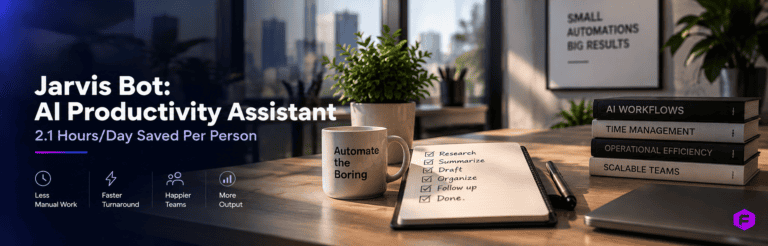
2.1 hrs Admin Time Saved Per Person/Day
View Case Study →
-70% Search Time Reduction
View Case Study →
10x Screening Capacity Increase
View Case Study →
If two or more of these are true, this is very likely worth exploring. Honest self-selection matters here more than it might seem — the businesses that get the most value from custom web application development are the ones who've already tried the easier, cheaper alternatives and found them insufficient, not the ones jumping straight to custom development as a first option.
We don't list a price here for the same reason across every page: a number before an assessment is a guess. Published industry pricing benchmarks for custom web application development vary enormously by scope, but a defined project budget typically emerges only after the actual requirements are clear — which is precisely what the free assessment establishes before any commitment on either side.
A real website tells your story and generates leads; a real web application is functional software — a portal, dashboard, or SaaS product your users actually operate. See our Web Design Services page for the former.
Web applications are accessed via browser; mobile apps require an app-store install. We'll help you decide which fits your use case during the assessment — see our Mobile App Development page for that comparison in more depth.
B2B data shows the same pattern — a 1-second-loading application converts at 3x the rate of a 5-second one. Slow internal tools cost ongoing productivity even without a purchase decision involved.
It depends on your actual workflow — the free assessment tells you honestly rather than assuming custom is always the right scale.
Yes — Core Web Vitals tracking is built into every launch, not sold as a separate discovery later.
Yes — we're often brought in specifically to extend an existing team's capacity for a defined project.
Yes — business and technical details are often discussed, and a real confidentiality agreement is standard practice before any detailed conversation happens.
It depends on scope — a focused internal tool and a full multi-tenant SaaS platform are very different timelines, outlined in our process above.
Yes — real documentation covering the system architecture and how to maintain it, not just a handoff with no notes.
Published industry pricing varies enormously by scope. We scope and price honestly after the free assessment rather than quoting a number upfront.
That's exactly what the free feasibility assessment is for — we'll tell you honestly if an existing tool would serve you better.
Against real, named benchmarks like Core Web Vitals, tested under actual user conditions, not just a quiet development environment.
Yes, when architected for it from the start — a key reason we assess growth expectations during the feasibility phase, not after launch.
We handle scope changes transparently, discussing impact on timeline and cost directly rather than absorbing it silently or refusing to adapt.
Yes — we work with businesses internationally and scope accordingly.
That's common — the feasibility assessment is built to handle genuinely novel use cases, not just the standard portal/dashboard/SaaS categories.
Yes — real backend and API work to connect with your actual existing systems is part of what we scope during the assessment.
Current AI-answer systems favor specific, checkable claims over vague marketing language — which is exactly why this page states plainly when custom development isn't the right choice, not only when it is.
Claim the free Feasibility Assessment, or book a strategy call directly if you already know your requirements.
Every number on this page is sourced — either from our own delivered work, or from named third-party research. Nothing here is invented to sound more impressive.
No pressure. The Feasibility Assessment and the first call are both free, zero obligation.
15-20 minutes. Not an hour-long pitch.
We review your specific requirements, not a generic pitch.
An honest read on what a performant build actually requires.
You leave with an answer on what your application needs.