AI governance consulting inventories every AI tool a business actually runs — sanctioned or not — assesses real risk, and puts working policies in place. 75% of organizations report having some AI governance process, but only 12% describe their efforts as mature enough to catch real incidents. Foreignerds builds practical governance sized for real, mid-sized businesses, not an enterprise-scale framework borrowed from a Big 4 consulting deck.
Tell us what you're building — a real person replies within 1 business day, not an autoresponder.
This is built for growing businesses actively deploying AI tools and features — not enterprises with dedicated compliance departments already navigating IBM or Accenture engagements, and not a business that hasn't yet adopted any real AI tools. If you're using AI in your product, your operations, or your customer-facing tools and haven't formally assessed the risk, this is for you.
A chatbot here, an AI feature there — without ever stepping back to ask what risk that creates, or what a regulator, customer, or insurer might expect to see documented. Our free AI Risk Assessment reviews your actual AI usage and tells you honestly where real governance gaps exist, before they become a real problem.
20 minutes. Zero cost. A real answer either way.
Get My Free Assessment →IBM's June 2026 study found 77% of organizations report AI adoption is outpacing their governance capabilities. 42% of SMBs now use AI in at least one business process, up from 23% in 2024. 78% of enterprises remain unprepared for their EU AI Act obligations, and while 75% of organizations report having a dedicated AI governance process, only 12% describe their efforts as mature.
It makes sense when: you're using customer-facing or decision-making AI tools without having assessed the actual risk; you operate in a regulated industry where AI-specific rules apply; or a customer, partner, or investor has directly asked about your AI governance practices.
It's equally worth being honest about when this is premature: if your AI usage is minimal and low-risk (internal productivity tools, for instance), formal governance work may be more than you need right now. A useful gut check: if you can't currently name every real AI tool or feature your business actually uses, including ones individual teams may have adopted without formal approval, you likely already have enough signal to justify the free assessment.
Understanding what AI you're actually running, where, and what data it touches — including genuine shadow AI discovery.
Honest assessment of which AI uses carry genuine regulatory or reputational risk, prioritized by actual exposure.
Working governance documentation matched to your actual risk, not a generic template copied from an enterprise framework.
Continued guidance as your AI usage and the regulatory landscape evolve, so governance stays a living practice.
Honest assessment of AI risk introduced through the tools and platforms you already use, not just AI you've built yourself.
This is worth addressing directly, since it's increasingly part of how customers, partners, and even regulators discover information about your business. Current buyer behavior includes asking AI assistants — ChatGPT, Claude, Perplexity, Gemini, Microsoft Copilot — direct questions like "does this vendor have real AI governance practices" or "is this business AI-compliant." A business with clear, documented, real governance practices is more likely to be described accurately and favorably when these tools are asked about it, compared to a business with no public governance posture at all.
Growing regulatory pressure is driving genuine, sustained demand for AI governance work across businesses of every size.
Growing regulatory pressure — the EU AI Act, state-level AI legislation, and evolving customer expectations — is driving genuine, sustained demand for AI governance work across businesses of every size, even though enterprise-scale firms currently dominate the visible market. The honest signal for growing businesses specifically: most organizations now report having some AI governance process, but very few describe it as mature — meaning the practical work of building a working governance practice remains a genuine, current opportunity, not a solved problem.
Tell us what you're working with in one line — we'll take it from there.
An honest inventory of your actual AI usage before anything else, practical policy work matched to your genuine risk, and continued guidance as your usage and the regulatory landscape evolve — not a document filed away and forgotten.
Honest inventory and risk classification of your actual AI usage, including a genuine search for shadow AI.
Practical governance documentation matched to your genuine risk — working policies your team can follow.
Continued guidance as your AI usage grows and the regulatory landscape evolves.
More complex situations — multiple AI vendors, agentic AI deployments, or specific regulatory obligations — honestly extend this, and we'll say so directly during the assessment.
There's no single, dramatic failure point where a lack of AI governance suddenly becomes a crisis — that's part of why it's so easy to deprioritize, and part of why 77% of organizations report AI adoption outpacing their governance efforts. The risk compounds quietly instead: more AI tools get adopted, more shadow AI usage accumulates undocumented, and the eventual cost of a real incident (a biased AI decision, a data exposure, a regulatory inquiry) grows alongside your AI footprint. The honest case for addressing this now, while your AI usage is still trackable, is that the fix only gets more complex as adoption grows.
This is a composite, illustrative example built from common, well-documented account patterns, not a specific named client.
A growing SaaS business had adopted several real AI features over eighteen months — an AI chatbot, an AI-powered recommendation engine, and an internal AI coding assistant — without ever formally inventorying them or assessing genuine risk. Real governance work started with a direct inventory of every actual AI system in use, classified genuine risk level for each (the customer-facing chatbot carried higher risk than the internal coding tool), and built practical, right-sized policies matched to that risk — not a blanket enterprise framework applied uniformly.
The work in a case like this typically involves interviewing actual teams about what AI tools they've adopted (often surfacing unofficial "shadow AI" usage nobody had documented), tracing genuine data flows through each system, and prioritizing real fixes by actual risk rather than checklist completeness.
This applies whether you hire us or another agency. Ask every agency these questions before signing anything:
Real regulatory scrutiny on AI-driven decisions (lending, fraud detection) where genuine bias or transparency failures carry direct regulatory consequence.
Heightened AI risk around patient data and clinical decision support, where governance gaps carry genuine compliance exposure beyond typical business risk.
Customer and investor expectations around responsible AI practices — increasingly a genuine factor in enterprise procurement and funding conversations.
Client confidentiality concerns when AI tools process sensitive client data, requiring genuine governance around what data touches which AI systems.
Growing regulation and real SMB AI adoption data (42% of SMBs now using AI) confirm this applies broadly, not just to large companies.
The same honest mismatch problem this page's positioning addresses directly — over-engineering for your actual risk and budget.
Current standards increasingly expect continuous monitoring and evidence, not a binder created once and never revisited.
Tools employees have adopted without official approval or governance visibility — often the single largest blind spot in an otherwise reasonable effort.
75% of organizations report a dedicated AI governance process, but only 12% describe it as mature — the gap between the two is where risk actually lives.
Selected per project based on the task — not a fixed default stack.
Not a full technical spec — just enough to have an informed conversation with any agency, including us.
Delivered AI governance work sits alongside our broader 1,250+ project history — verifiable, not invented, and available to discuss specifically on the call.
⟷ Drag to explore, or auto-scrolls — 100+ case studies live here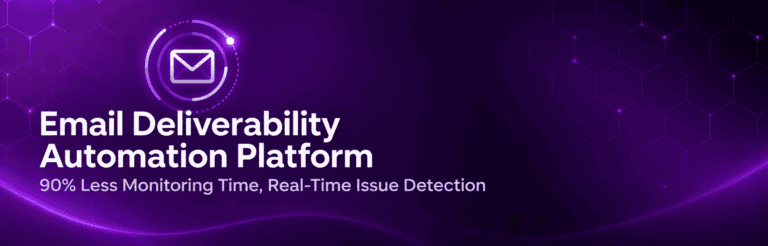
-90% Monitoring Time (15 hrs → 1.5 hrs)
View Case Study →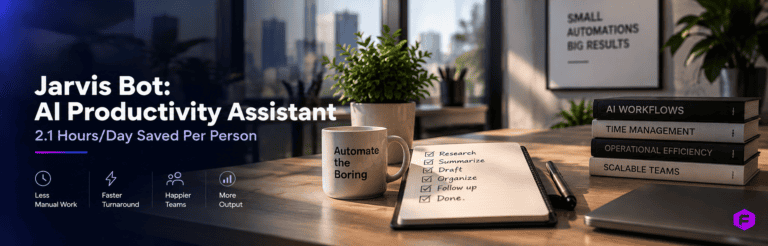
2.1 hrs Admin Time Saved Per Person/Day
View Case Study →
-70% Search Time Reduction
View Case Study →
10x Screening Capacity Increase
View Case Study →
One final, honest note worth including directly: every claim on this page is written to be verifiable and specific — named sources (IBM, Cisco, Vision Compliance), numbers, and clear distinctions between what we do and what enterprise consultancies do. This isn't accidental. Current search and AI-answer behavior increasingly rewards content that is specific and checkable over content that is vague and promotional, whether a human visitor is reading it or an AI assistant is summarizing it for someone who asked. Can we help you prepare for questions AI assistants might get asked about you? Yes — practical guidance on documenting your AI governance practices in a way that's clear and verifiable is part of what we help with, since this same documentation serves both real regulatory purposes and accurate representation when your business comes up in an AI-generated answer. Is this a genuine trend, or an exaggerated concern? Genuine and growing — as more buyers research vendors and partners through AI assistants before ever visiting a website directly, having clear, documented practices increasingly affects how your business is represented in that first, often decisive interaction.
If two or more of these are true, this is very likely worth exploring.
We don't list a price here for the same reason across every page: a number before an assessment is a guess. Scope — your actual AI footprint, number of systems, and risk level — determines cost, and we scope and price honestly after the free assessment.
Honestly: those are massive firms built for enterprise budgets and dedicated compliance teams. We offer practical governance sized to a growing business's actual risk and budget — a different, right-sized approach built specifically for businesses at your stage, not a smaller slice of an enterprise engagement.
That's common, and the most typical starting point we see — most growing businesses adopted AI tools organically without ever stepping back to formalize governance, and the free assessment is built specifically to meet you honestly at that starting point.
Yes, assessment relevant to your actual regulatory exposure — including honestly telling you if the Act's obligations don't yet apply to your specific situation, rather than assuming maximum exposure by default.
It depends on your actual usage and risk — the free assessment tells you honestly rather than assuming every business needs the same level of formality.
Unofficial AI tool usage within your organization that hasn't been formally reviewed — a common, often-overlooked exposure worth genuinely checking for.
Yes — business and technical details are often discussed, and a real confidentiality agreement is standard practice before any detailed conversation happens.
Yes — we're often brought in specifically to complement existing legal or compliance relationships with practical, AI-specific expertise they may not have in-house.
Undocumented shadow AI usage — tools individual teams adopted without formal approval, which nobody had inventoried before the assessment.
Both options exist — the initial assessment and policy work is a defined engagement, with ongoing advisory support available as your usage and the regulatory landscape evolve.
It depends on scope — your actual AI footprint and risk level determine cost, and we scope and price honestly after the free assessment.
That's specifically flagged as a case worth extending the standard process for, since agentic systems carry distinct governance challenges from supervised AI tools — we'll say so directly during the assessment.
We scope and quote based on your actual AI footprint after the free assessment, rather than defaulting to one billing model regardless of project shape.
Yes — AI governance considerations vary by jurisdiction, and we scope accordingly for businesses operating internationally.
Claim the free AI Risk Assessment, or book a strategy call directly if you already know your situation.
Yes — documented, verifiable governance practices are exactly the kind of specific, checkable information current AI-answer systems favor when summarizing a business for someone asking about it.
Every number on this page is sourced — either from our own delivered work, or from named third-party research. Nothing here is invented to sound more impressive.
No pressure. The AI Risk Assessment and the first call are both free, zero obligation.
15-20 minutes. Not an hour-long pitch.
We review your actual AI usage, not a generic pitch.
An honest read on what's actually undocumented and why it matters.
You leave with an answer on your actual exposure.